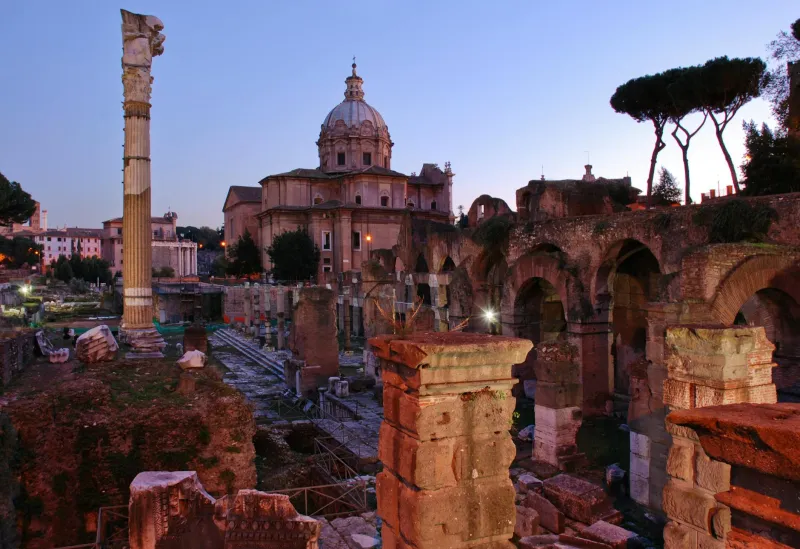
Every morning at sunrise, Roman workers would gather in the Forum Boarium and other designated squares throughout the empire, hoping to catch the eye of a contractor who might need them for a day, a week, or maybe a season. No apps, no algorithms — just desperate people competing for temporary work that paid by the task.
If this sounds familiar, it should. The gig economy didn't invent anything. It just put a smartphone interface on the world's oldest employment system.
The Original Temp Agency
Roman collegiae — trade associations that functioned as informal labor pools — operated exactly like modern staffing platforms. Workers with similar skills banded together, not for collective bargaining power (that would come much later), but to create a marketplace where contractors could find the right person for short-term jobs.
A ship captain needed dock workers for three days to unload grain from Egypt? He'd visit the collegium of stevedores. A wealthy Roman wanted his villa renovated before hosting a dinner party? The builders' association had guys available immediately, no long-term commitment required.
The psychology was identical to what drives today's gig platforms: employers got maximum flexibility without the burden of permanent staff, and workers got... well, workers got the illusion of independence while bearing all the risk.
Medieval Guilds: The First Attempt at Worker Protection
By the medieval period, European societies had learned what happens when you push the temp-worker model too far. Craft guilds emerged as a direct response to the instability that Roman-style day labor created. These weren't just trade associations — they were comprehensive social safety nets.
Guilds controlled who could work, set minimum prices for services, provided disability insurance, and even arranged funerals for members. They represented the first systematic attempt to solve the fundamental tension between labor flexibility and worker security.
But here's the pattern that repeats throughout history: every protection system eventually becomes a barrier to entry. By the 1700s, guild membership had become hereditary in many places. The son of a baker was guaranteed work; the son of a farmer couldn't break into the trade no matter how talented he was.
The Industrial Revolution's Piece-Work Revival
When the Industrial Revolution arrived, factory owners looked at the guild system and saw exactly what modern tech CEOs see when they look at traditional employment: expensive, inflexible, and ripe for disruption.
The solution was piece-work — paying workers by the unit produced rather than by the hour. Textile mills, in particular, perfected this model. Workers had no guaranteed income, no set schedule, and no job security. They were essentially freelancers who happened to work in the same building.
The language factory owners used to justify this system would fit perfectly in a modern startup pitch deck. They talked about "empowering workers" and "rewarding merit" and "creating opportunities for entrepreneurial spirits." They were giving workers the freedom to succeed or fail based on their own efforts.
What they were actually doing was transferring all economic risk from employers to employees — the exact same transfer that defines today's gig economy.
The New Deal Interruption
The 1930s represent the only sustained period in human history when societies successfully pushed back against the temp-worker default. The New Deal in America, similar programs in Europe, and even the Soviet Union's command economy all shared one insight: pure labor flexibility creates social instability that eventually threatens the economic system itself.
For roughly 40 years, from the 1940s to the 1980s, most developed nations operated on the assumption that full-time employment with benefits was both economically efficient and socially necessary. This wasn't natural — it was a deliberate policy choice that required constant maintenance.
The Cycle Completes
By the 1990s, that maintenance had stopped. Globalization, technology, and changing political priorities all pushed toward the same outcome: a return to the Roman model of flexible, disposable labor.
The gig economy platforms that emerged in the 2000s didn't invent this system — they just made it scalable. Uber, TaskRabbit, and Fiverr are essentially digital collegiae, matching temporary workers with short-term tasks.
The psychological appeals are identical too. Just as Roman contractors promised day laborers the freedom to choose their own schedules, modern platforms emphasize flexibility and independence. The reality — economic insecurity, income volatility, and zero safety net — remains unchanged.
History's Lesson
Every society that has relied heavily on temporary labor has eventually had to invent protections for workers, because pure flexibility creates instability that undermines the system itself. Rome's collegiae evolved into medieval guilds. Industrial piece-work led to labor unions. The gig economy will likely produce its own version of worker protection — the only question is what form it will take.
The pattern suggests we're not witnessing a revolution in how work functions. We're just running the same cycle our ancestors ran, with better technology and more sophisticated marketing. The fundamental tension between employer flexibility and worker security hasn't changed in 2,000 years.
Neither has the human psychology that drives both sides of the equation. Employers will always prefer disposable labor when they can get it. Workers will always want security when they can organize to demand it. The only variable is which side has more power at any given moment in history.