When Caesar Became Augustus: The Ancient Art of Reinventing Your Reputation

The Ultimate Corporate Rebrand Started With a Name Change
In 27 BC, Gaius Octavius had an image problem. He'd spent the previous decade in brutal civil wars, ordering executions, and generally behaving like the kind of strongman that made Romans nervous about the death of their republic. But instead of doubling down or disappearing, Octavius did something that would become the template for every corporate crisis management campaign in history: he completely reinvented himself.
First, he changed his name to Augustus — literally meaning 'the revered one.' Then he systematically rewrote his public narrative, transforming from a ruthless warlord into a peaceful administrator who'd reluctantly accepted power to save Rome from chaos. He commissioned new artwork, funded public works projects, and carefully cultivated relationships with poets and historians who would tell his preferred version of events.
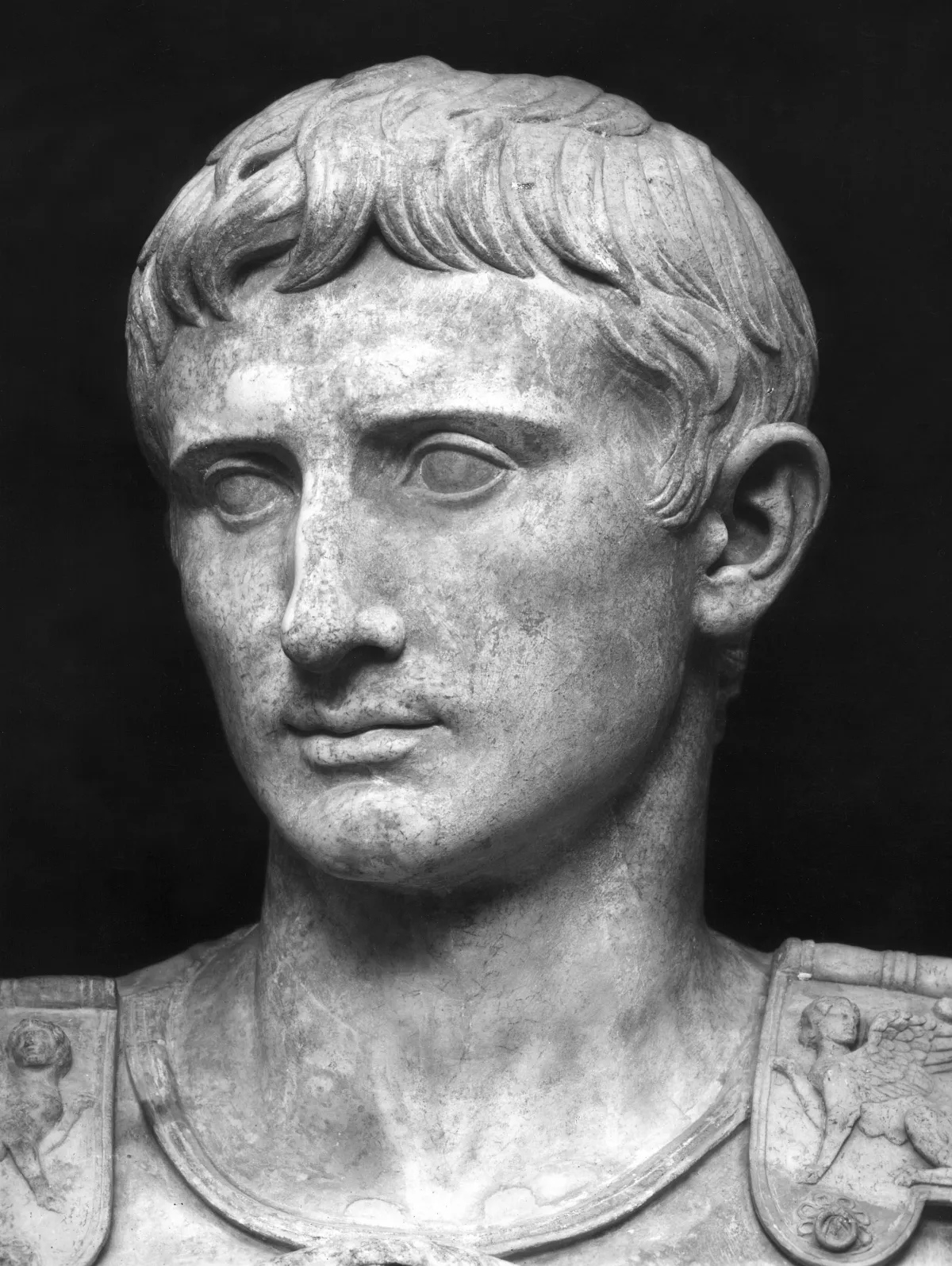 Photo: Augustus, via i.pinimg.com
Most brilliantly, Augustus didn't just deny his violent past — he reframed it as necessary sacrifice for the greater good. The executions became 'difficult decisions made in extraordinary times.' The civil wars became 'unfortunate conflicts that ended chaos and brought peace.' Sound familiar?
When Pharaohs Invented the Apology Tour
But Augustus was building on techniques that were already ancient by his time. Egyptian pharaohs had been managing reputation crises for over two millennia, developing sophisticated strategies for surviving everything from military defeats to economic disasters.
When Pharaoh Hatshepsut faced criticism for being a female ruler, she didn't argue for gender equality — she literally had herself depicted with a beard in official artwork and claimed divine masculine authority. When her reign ended, her successor attempted 'damnatio memoriae,' systematically destroying her images and inscriptions. But Hatshepsut had anticipated this, hiding backup depictions in locations that wouldn't be discovered for thousands of years.
 Photo: Hatshepsut, via c8.alamy.com
The psychological insight was profound: public memory is malleable, but only if you control the narrative infrastructure. Hatshepsut understood that winning the immediate political battle mattered less than shaping how future generations would remember the conflict.
Egyptian crisis management also pioneered the 'listening tour' concept. When pharaohs faced popular unrest, they would embark on highly publicized journeys to hear citizen complaints, always accompanied by scribes who documented their responsiveness to public concerns. These tours served dual functions: they demonstrated humility while gathering intelligence about opposition talking points.
Medieval Churches Master the Pivot
The Catholic Church during the medieval period faced a crisis that would challenge any modern corporation: how do you maintain credibility when your core leadership is obviously corrupt? The Church's solution was revolutionary — they separated the institution from the individuals, creating a crisis management framework that allowed for systemic renewal without admitting systemic failure.
When Pope Alexander VI's scandals became impossible to ignore, the Church didn't defend his behavior. Instead, they positioned him as an aberration who'd betrayed timeless institutional values. They emphasized the Church's eternal mission while distancing themselves from temporary leadership failures. The message was clear: the institution was bigger than any individual's mistakes.
This approach required sophisticated narrative management. Church historians carefully documented which papal actions reflected 'true' Catholic values versus which represented personal failings. They developed theological frameworks that allowed believers to maintain faith in the institution while acknowledging leadership corruption.
The psychological brilliance was creating cognitive space for followers to separate their loyalty to the organization from their judgment of specific leaders. This innovation would later be adopted by every institution facing leadership scandals, from corporations to political parties.
Renaissance Republics and the Art of Strategic Amnesia
Venice in the 15th century faced a different kind of reputation crisis: how do you maintain your image as a republic while becoming increasingly oligarchic? The Venetian solution was to perfect the art of selective memory, systematically emphasizing historical precedents that supported current power structures while quietly ignoring inconvenient democratic traditions.
Venetian chroniclers didn't lie about their history — they curated it. Official histories highlighted episodes where concentrated power had saved the republic from external threats, while downplaying periods when broader participation had led to successful outcomes. They created a narrative where current arrangements weren't betrayals of republican values, but natural evolutions that preserved republican essence.
This required massive investment in cultural production. Venice funded historians, artists, and architects who would embed preferred narratives into permanent cultural infrastructure. The message wasn't delivered through temporary propaganda campaigns, but built into the physical and intellectual landscape that shaped how citizens understood their society.
Modern corporations use identical techniques when they fund business schools, think tanks, and research institutions that promote favorable interpretations of their industry's role in society. The goal isn't to win immediate arguments, but to shape the intellectual framework within which future debates occur.
The Playbook That Never Changes
Whether you're studying Augustus, Hatshepsut, medieval popes, or Renaissance oligarchs, the reputation management playbook follows remarkably consistent patterns:
Reframe, Don't Deny: Successful reputation rehabilitation rarely involves claiming that problematic events never happened. Instead, it recontextualizes those events within narratives that justify or minimize their significance.
Control the Infrastructure: Temporary messaging campaigns fade, but permanent changes to institutional infrastructure shape long-term memory. Successful rebranding invests in schools, media, and cultural institutions that will promote preferred narratives for generations.
Separate Individual from Institution: When specific leaders become liabilities, successful organizations develop frameworks for maintaining institutional credibility while distancing themselves from individual failures.
Create Cognitive Escape Routes: Effective reputation management gives audiences psychological permission to maintain their existing loyalties while acknowledging uncomfortable facts. People want to continue supporting institutions they're invested in, but they need narratives that make that support feel rational.
Modern Crisis Management: Ancient Techniques in New Packaging
Every contemporary corporate crisis follows this ancient script. When Facebook faced criticism over privacy violations, they didn't deny the problems — they reframed them as growing pains that would lead to better user protection. When Wells Fargo confronted account fraud scandals, they separated institutional values from individual employee misconduct. When Uber dealt with workplace culture issues, they positioned leadership changes as evidence of organizational evolution.
The specific tactics have been updated for modern media, but the underlying psychology remains identical. Public relations firms essentially sell access to 2,000-year-old reputation management techniques, packaged in contemporary language.
What's remarkable isn't that these techniques work, but that they work so consistently across different cultures, time periods, and political systems. The human psychology that makes people want to forgive institutions they're invested in hasn't changed since ancient Egypt.
Why Historical Perspective Matters
Understanding the continuity of reputation management techniques provides valuable perspective on contemporary corporate and political communications. When you recognize that current crisis management campaigns are following scripts written by Roman emperors and medieval popes, you become a more sophisticated consumer of institutional messaging.
More importantly, historical analysis reveals which reputation rehabilitation efforts succeed long-term versus which only provide temporary relief. Augustus successfully transformed his legacy for millennia. Medieval church reforms maintained institutional credibility across centuries. But many attempted rebrands fail because they focus on short-term messaging rather than long-term infrastructure development.
The next time you're watching a corporation or political figure navigate a major scandal, ask yourself: are they running the Augustus playbook, the Hatshepsut strategy, or the medieval Church approach? The techniques are ancient, but recognizing them gives you power to evaluate their effectiveness.
After all, human psychology hasn't changed in 5,000 years. But once you understand the historical patterns, you become much harder to manipulate by them.