Fake News Traveled Fast in Ancient Rome Too
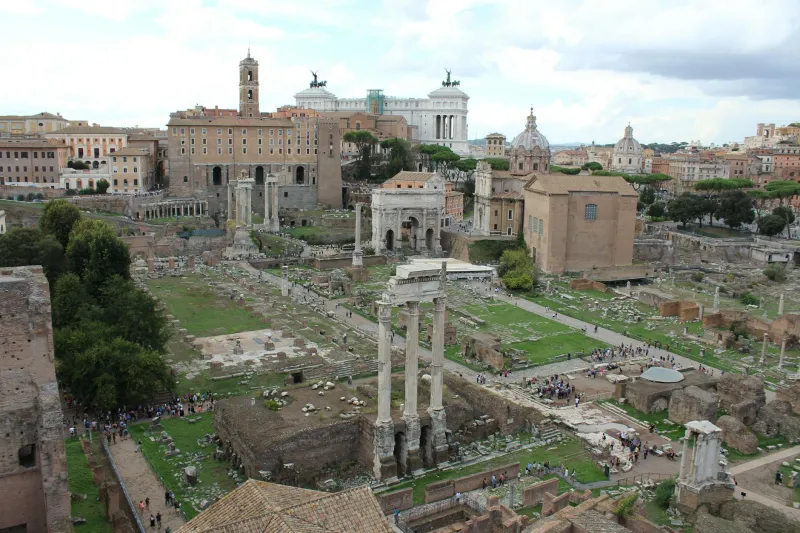
When Caesar's Death Went Viral (44 BC Style)
On March 15, 44 BC, Julius Caesar was assassinated in the Roman Senate. Within hours, wildly different versions of what happened were racing through Rome's streets faster than any senator could set the record straight. Some stories claimed Caesar had been warned by soothsayers. Others insisted Cleopatra was behind the plot. A few even suggested Caesar had faked his own death.
Sound familiar? It should. The same psychological triggers that make us share unverified tweets today were already hard at work in ancient Rome's forums and bathhouses.
The Original Information Superhighway
Long before we had algorithms optimizing for engagement, humans built remarkably efficient networks for spreading gossip. Roman taverns functioned like medieval Facebook groups — gathering spots where travelers, merchants, and locals traded stories alongside wine and bread. The juiciest rumors spread fastest, just like today's most outrageous headlines.
Medieval Europe perfected the art with town criers who competed for attention by embellishing their announcements. A simple grain shortage could become a tale of imminent famine by the time it reached the next village. The more dramatic the story, the more likely people were to repeat it.
By the 1600s, handwritten newsletters circulated through European coffee houses with the speed and accuracy of modern chain emails — which is to say, very fast and not very accurate. These "corantos" mixed legitimate news with wild speculation, creating an early version of the information chaos we know so well.
Why We're Wired to Share Before We Think
The psychology behind viral misinformation hasn't evolved much since our ancestors gathered around campfires. Humans are social creatures who bond through shared information, especially information that makes us feel like insiders with special knowledge.
In 1835, the New York Sun published a series of articles claiming astronomers had discovered life on the moon — complete with winged humanoids and lunar forests. The "Great Moon Hoax" spread across America faster than the truth could catch up, partly because people enjoyed feeling like they were in on an incredible discovery.
The same emotional triggers drive modern viral content: surprise, outrage, and the satisfaction of being first to share breaking news. Whether you're a Roman citizen hearing about Caesar's assassination or a Twitter user seeing an unverified celebrity death rumor, your brain lights up the same way.
Speed vs. Truth: The Ancient Struggle
Every pre-digital society faced the same challenge we do today — information travels faster than verification. In 1814, rumors that Napoleon had been killed spread through London so quickly that government bond prices soared before officials could confirm the news was false. The Rothschild family allegedly made a fortune by knowing the real story while everyone else traded on gossip.
During the American Revolution, both Patriots and Loyalists weaponized rumor mills to shape public opinion. Stories of British atrocities spread through colonial taverns and meeting houses, often growing more horrific with each retelling. The Boston Massacre, where five colonists died, was transformed through repeated retellings into a symbol of British tyranny that helped fuel a revolution.
The pattern repeats throughout history: dramatic events trigger waves of speculation that outpace official accounts. Human nature ensures that the most emotionally compelling versions spread furthest, regardless of their accuracy.
The Tavern Keeper's Dilemma
Ancient innkeepers faced the same content moderation challenges as modern social media platforms. Do you shut down conversations that might be spreading false information? Or do you let people talk freely and hope the truth eventually wins out?
Most chose the path of least resistance — let the rumors flow and profit from the increased business. Sound familiar? The economic incentives that keep misinformation alive today were already operating in medieval alehouses.
What the Ancients Got Right (And Wrong)
Some ancient societies developed surprisingly sophisticated approaches to information quality. Roman officials created formal channels for distributing news through the "Acta Diurna" — daily gazettes posted in public spaces. While this didn't stop rumors, it provided an authoritative source people could reference.
Medieval guilds developed reputation systems where merchants who spread false information about trade conditions could lose their standing in the community. The consequences were real and immediate, creating stronger incentives for accuracy than our modern anonymous internet provides.
But even these systems had flaws. Official sources could be corrupted, and reputation-based networks excluded outsiders who might have important information to share.
The More Things Change...
Today's misinformation crisis feels unprecedented because of its scale and speed, but the underlying human psychology remains unchanged. We're still the same species that turned Caesar's assassination into a dozen different conspiracy theories within hours of it happening.
The difference isn't that we're more gullible than our ancestors — it's that our rumor mill now operates at digital speed with global reach. A false story that once might have taken weeks to spread from Rome to Gaul can now circle the planet in minutes.
Understanding this history won't solve our modern information problems, but it might help us approach them with more humility. Humans have been struggling with the tension between free information flow and accuracy for thousands of years. We're not the first generation to face this challenge, and we probably won't be the last to feel overwhelmed by it.