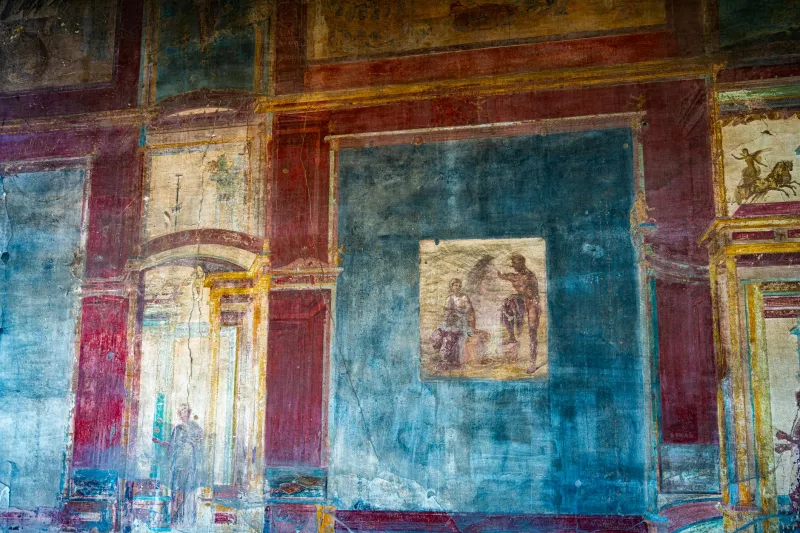
The Original Content Creators
In 79 AD, Mount Vesuvius buried Pompeii under volcanic ash, accidentally preserving the world's first social media feed. Scratched into walls throughout the city, archaeologists found thousands of pieces of graffiti that read like ancient tweets: political jokes, celebrity gossip, bathroom humor, and relationship drama.
One wall featured a drawing of a gladiator with an enormous phallus and the caption "Celadus the Thracian makes the girls moan." Another showed a crude cartoon of two politicians with the text "Vote for Vatinius — he's the biggest crook but at least he's honest about it."
These weren't random scribblings. They were viral content, ancient style.
The Psychology of Spread
What made Roman graffiti go viral was the same thing that makes TikToks explode today: they hit emotional triggers that humans can't resist sharing. Outrage, humor, scandal, tribal identity — the psychological buttons haven't changed in 2,000 years.
Take the most famous piece of Pompeii graffiti: "I screwed the barmaid." Crude? Absolutely. Viral? You bet. It combined sexual bragging with social transgression, two elements guaranteed to get people talking. The Roman equivalent of "this you?" trending on Twitter.
The medium was different, but the content strategy was identical to modern viral marketing: create something that makes people feel smart for sharing it, outraged enough to respond to it, or tribal enough to spread it to their in-group.
Ancient Influencer Networks
Roman satirists understood audience targeting better than most modern marketers. Juvenal didn't just write poems criticizing the emperor — he wrote poems that would get repeated in specific social circles, by specific types of people, in specific contexts.
His famous line "bread and circuses" wasn't just social commentary — it was a meme designed to spread among educated Romans who wanted to signal their sophistication. Like a tweet crafted to get retweeted by blue-check journalists.
The distribution network was human-powered but remarkably efficient. A joke told in a Roman bathhouse could reach Alexandria within weeks, carried by merchants, soldiers, and slaves who found it too good not to repeat. The same psychological compulsion that makes you forward a funny video to your group chat.
Medieval Memes and Message Control
Medieval rulers faced the same content moderation challenges as modern platforms, just with higher stakes. A satirical song about the king could spark rebellions. A scandalous rumor about the queen could destabilize alliances. Viral content was literally a matter of life and death.
King John of England was so paranoid about viral criticism that he banned minstrels from performing certain songs. The 13th-century equivalent of shadow-banning accounts that spread misinformation about the government.
But medieval content creators were just as creative at evading censorship as modern ones. They developed elaborate systems of allegory, coded language, and plausible deniability. A song about a "wicked wolf" could spread anti-royal sentiment while technically being about wildlife.
The Gossip Superhighway
Before printing presses, the fastest way to spread information across Europe was through merchant networks and pilgrimage routes. These weren't just trade routes — they were content distribution systems.
A juicy piece of gossip could travel from London to Constantinople faster than official diplomatic messages, carried by people who had no official reason to spread it but couldn't resist sharing something scandalous.
The psychology was identical to modern social sharing: people spread information that made them feel important, connected, or in-the-know. A merchant who could drop fresh gossip about the French court was suddenly the most interesting person in the tavern.
When Rumors Moved Markets
Ancient viral content wasn't just entertainment — it had real economic consequences. A rumor about crop failures could trigger hoarding. Gossip about a merchant's financial troubles could cause bank runs. Political satire could crash currency values.
The Roman stock market (yes, they had one) was incredibly sensitive to viral information. Traders would pay premium prices for early access to gossip, rumors, and unofficial news. The ancient equivalent of algorithmic trading based on Twitter sentiment.
This created the world's first information warfare. Rival merchants would deliberately spread false rumors to manipulate prices. Political factions would launch coordinated disinformation campaigns to damage opponents. The same tactics Russian troll farms use today, just powered by human networks instead of bot accounts.
The Unbreakable Pattern
Every civilization has faced the same basic challenge: how do you control information that people desperately want to share? The answer is always the same — you can't.
Chinese emperors tried to control the spread of seditious poetry. Islamic caliphs banned satirical storytellers. European kings executed people for spreading the wrong jokes. None of it worked, because the human drive to share compelling content is stronger than any authority's ability to suppress it.
Modern content platforms are just the latest attempt to solve an ancient problem: how do you benefit from viral content without being destroyed by it? Facebook's content moderation policies, YouTube's algorithm tweaks, Twitter's fact-checking labels — they're all variations on strategies that rulers have been trying for thousands of years.
Why Ancient Content Still Works
The most successful viral content today uses the same emotional triggers that worked in ancient Rome: outrage, humor, tribal signaling, and social transgression. We haven't invented new ways to capture human attention — we've just made the old ways faster and more efficient.
A TikTok that goes viral today probably would have been graffitied on a Pompeii wall 2,000 years ago. A Twitter thread that gets 100,000 retweets is using the same psychological mechanisms as a Roman satirical poem that got repeated across the empire.
The technology changes, but the psychology doesn't. Humans have always been content-sharing animals, and the stuff we can't stop sharing has remained remarkably consistent across millennia. Your ancestors were just as addicted to viral content as you are — they just had to walk to the forum to get their fix.