
The Original Subscription Hell
You know that sinking feeling when you realize you've been paying for a gym membership you haven't used in eight months? Romans felt it too. Except instead of Planet Fitness, they were stuck paying monthly dues to trade guilds that controlled their entire livelihood.
The collegium system—essentially Rome's version of professional associations—operated on a simple principle: small, regular payments that felt reasonable individually but added up to significant lifetime extractions. Sound familiar?
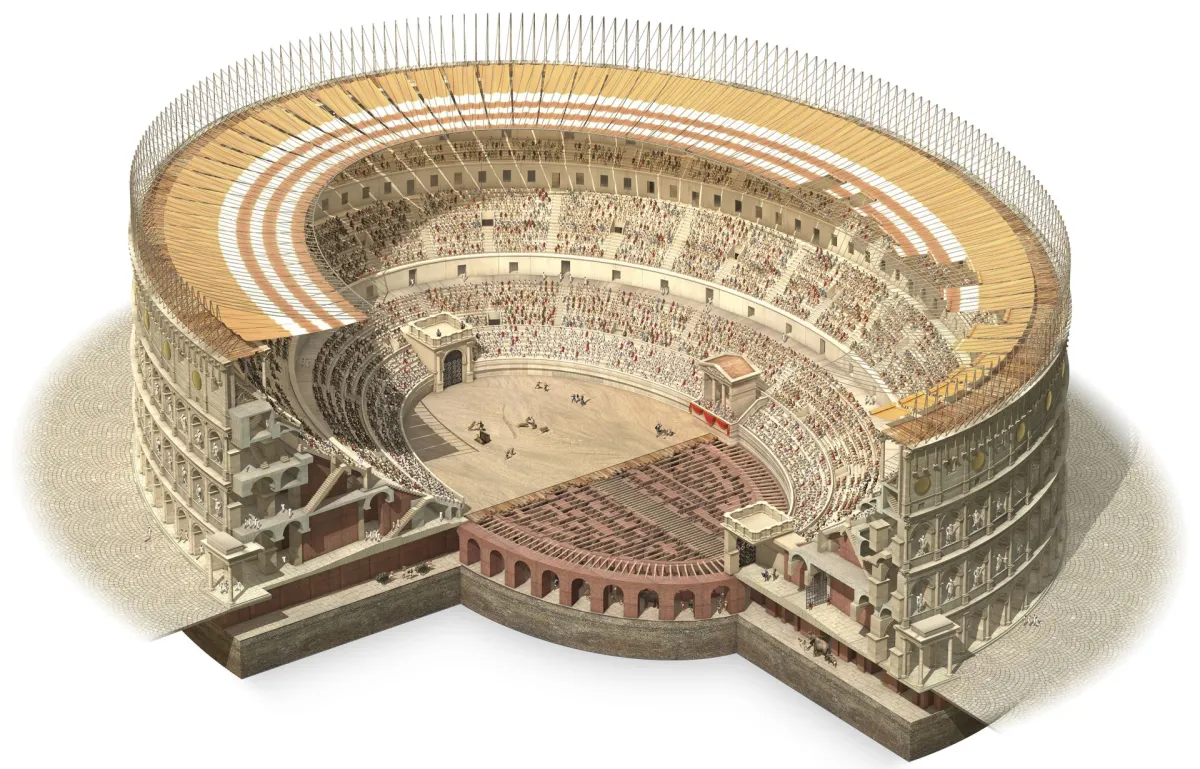 Photo: Ancient Rome, via res.cloudinary.com
A baker in second-century Rome might pay monthly dues to the collegium pistorum (bakers' guild), annual festival fees, special assessments for guild buildings, and "voluntary" contributions for members' funerals. Each payment seemed modest. Together, they represented a substantial portion of annual income.
The genius wasn't in the individual fees—it was in making them feel essential and inevitable.
Medieval Monasteries: The Ultimate Subscription Service
If Roman guilds were Netflix, medieval monasteries were Amazon Prime on steroids. They offered a complete lifestyle package: spiritual guidance, community belonging, economic security, and eternal salvation—all for the low, low price of everything you owned.
Monastic orders perfected what modern subscription services are still trying to achieve: total lifestyle integration. Once you joined, leaving wasn't just difficult—it was literally unthinkable. The monastery provided your food, shelter, purpose, and social circle. Canceling meant losing your entire identity.
The Benedictines were particularly sophisticated in their approach. New monks went through a graduated commitment process: first as guests, then postulants, then novices, and finally full brothers. Each stage involved deeper financial and social integration, making retreat increasingly costly.
 Photo: Benedictines, via benedictinesofmary.org
This wasn't accidental. Medieval monasteries understood the same psychological principle that keeps you subscribed to services you barely use: the pain of losing something you've already paid for often outweighs the rational decision to stop paying.
The Arithmetic of Small Bleeding
Here's the constant across twenty centuries: humans are terrible at calculating the cumulative cost of small, regular payments. Roman guild members, medieval peasants paying church tithes, and modern consumers signing up for streaming services all make the same mental error.
We focus on the monthly cost, not the annual total. We imagine we'll use the service more than we actually do. We overestimate our ability to remember to cancel when we no longer need it.
A Roman craftsman paying two denarii monthly to his guild might not realize he was spending nearly 10% of his annual income on membership fees. A medieval peasant giving "just" a tenth of his harvest to the church might not calculate that he was working five weeks a year purely to fund the institution.
Today's subscription economy exploits exactly the same cognitive blind spot. The average American household now pays over $200 monthly for subscription services—most of which they barely use.
The Cancellation Gauntlet
Roman guilds pioneered another modern favorite: making cancellation theoretically possible but practically nightmarish. Want to leave your collegium? Sure, just forfeit your workshop lease (controlled by the guild), lose access to raw materials (distributed through guild networks), and give up your customer base (maintained through guild relationships).
Medieval guilds refined this approach. Leaving meant losing your right to practice your trade in the city, forfeiting years of invested apprenticeship, and abandoning the social networks that determined your family's future prospects.
Modern subscription services use the same playbook: buried cancellation links, multiple confirmation screens, retention specialists trained to overcome objections, and "special offers" to keep you hooked just a little longer.
The Psychology Never Changes
Why does this model work across millennia? Because the underlying human psychology is constant.
We're loss-averse creatures who hate giving up things we've already paid for, even when continuing to pay makes no rational sense. We're social animals who fear exclusion from groups that provide identity and belonging. We're busy people who often choose the path of least resistance, even when that path slowly drains our resources.
Roman guild masters, medieval abbots, and modern subscription service executives all understand the same fundamental truth: the easiest way to extract ongoing value from people isn't to convince them to make one large payment, but to normalize a series of small ones that become invisible through repetition.
The Eternal Return
Every generation thinks it invented the subscription model. Software-as-a-Service, streaming platforms, meal kits, beauty boxes—we act like recurring revenue is a brilliant modern innovation.
But humans have been trapped in subscription relationships for thousands of years. The technology changes, the fundamental dynamic doesn't. Whether it's Roman guild dues, medieval church tithes, or Netflix's "just one more month," we keep falling for the same basic trick.
The only real difference is scale. Where ancient subscription traps might capture hundreds or thousands of people, modern ones can hook millions simultaneously. But the psychology that makes them work—our inability to properly value ongoing costs, our fear of losing access to groups and services, our tendency to procrastinate on administrative tasks—remains exactly the same.
Your ancestors were just as bad at canceling subscriptions as you are. They just called them guild dues.