
The Original LinkedIn
Cicero's inbox would have made a modern HR director weep with envy. The Roman statesman received dozens of commendatio letters weekly—formal recommendations for job candidates, political appointments, and business opportunities. Each letter represented a careful calculation of social capital, political favor, and professional obligation.
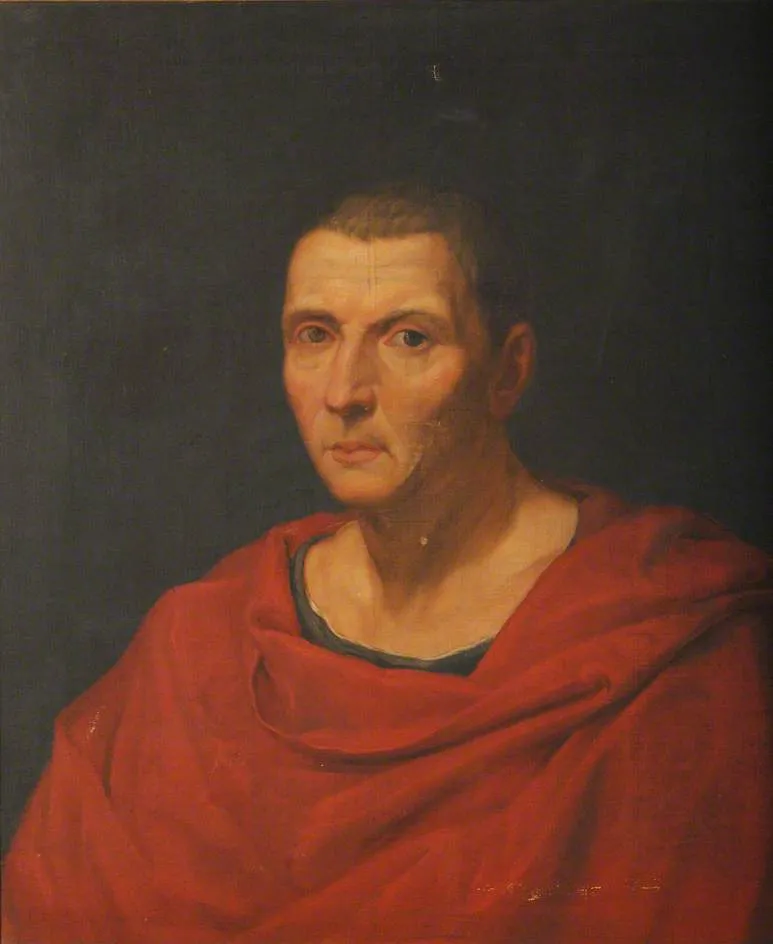 Photo: Cicero, via paintingvalley.com
These weren't casual "hey, know anyone hiring?" messages. Roman recommendation letters were elaborate documents that spelled out exactly what the recommender owed the candidate, what they expected from the recipient, and how the favor would be repaid. They were contracts disguised as courtesy.
Sound familiar? Every LinkedIn message, every "I'd love to connect" email, every "coffee to pick your brain" request follows the exact same formula Romans perfected two millennia ago.
The Patron-Client Industrial Complex
Roman society ran on a formal system called clientela—a network of mutual obligations between patrons (powerful people) and clients (everyone else). Your patron found you jobs, legal representation, and business opportunities. In return, you provided political support, social prestige, and absolute loyalty.
This wasn't networking as we understand it today. It was institutionalized nepotism with elaborate rules and social protocols.
A young Roman looking for his first job didn't send out resumes—he activated his family's client networks. His father would write to patrons, who would write to their contacts, who would write to potential employers. Each letter in the chain carried specific social weight and created specific obligations.
The system was so entrenched that Romans had specialized vocabulary for different types of recommendations. A commendatio for a routine favor was different from a commendatio for a major appointment, which was different from a commendatio for a family member.
Medieval Guilds: Networking with Monopoly Power
Medieval craft guilds took Roman networking principles and added legal enforcement. Want to become a goldsmith in 13th-century Florence? You needed a guild member to sponsor your apprenticeship, vouch for your character, and formally present you to the guild leadership.
This wasn't just professional courtesy—it was economic gatekeeping. Guild sponsorship determined who could practice a trade, where they could work, and whom they could serve as customers. The sponsor's reputation became the candidate's collateral.
Guild records from across Europe show the same pattern: successful craftsmen almost always had family connections or powerful sponsors within their guild. Merit mattered, but access mattered more.
The most successful medieval merchants weren't necessarily the most skilled—they were the best connected. A mediocre goldsmith with strong guild relationships could build a thriving business, while a talented craftsman without proper introductions might never find steady work.
Renaissance Networking: Art Meets Politics
The Renaissance elevated networking to high art. Artists, scholars, and merchants created elaborate correspondence networks that spanned continents. A single letter of introduction could open doors from Venice to Vienna.
Leonardo da Vinci's career illustrates the power of Renaissance networking. His move from Florence to Milan wasn't the result of a job posting—it came through a carefully orchestrated introduction by Lorenzo de' Medici to Ludovico Sforza. The letter of recommendation emphasized Leonardo's military engineering skills rather than his artistic talents, showing how networked introductions could reshape entire careers.
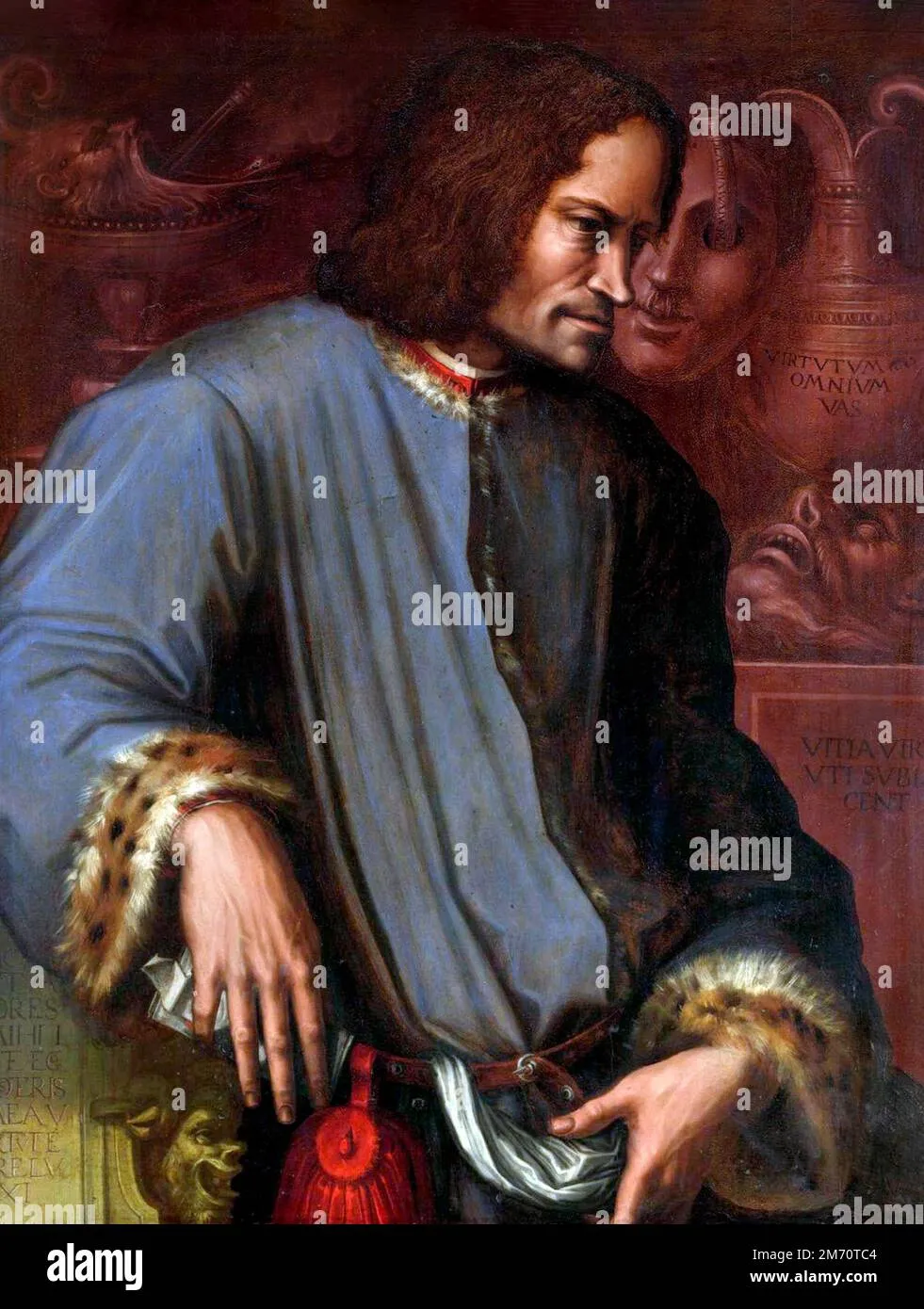 Photo: Lorenzo de' Medici, via c8.alamy.com
 Photo: Leonardo da Vinci, via static.b-bro.net
Humanist scholars created the first truly international professional networks, with formal systems for introducing colleagues, sharing opportunities, and building reputation across borders. Their letters read remarkably like modern LinkedIn messages: "I'm pleased to introduce my colleague Johannes, whose expertise in Greek translation would be valuable to your academy..."
The American Experiment in Meritocracy
America's founders were acutely aware of how European patronage systems stifled opportunity. They designed institutions meant to reward merit over connections: public schools, competitive examinations, and formal application processes.
It didn't work.
By the 1800s, American businesses had recreated European networking patterns with American characteristics. The "old boy networks" of Ivy League colleges, exclusive clubs, and family businesses functioned exactly like Roman patron-client relationships, just with different terminology.
A Harvard connection in 1850 provided the same advantages as a powerful Roman patron in 50 AD: access to opportunities, introductions to decision-makers, and social proof of worthiness.
Modern Networking: Ancient Wine in Digital Bottles
LinkedIn didn't invent professional networking—it digitized a system that's existed for thousands of years. Every feature of the platform maps directly onto historical precedents:
- Endorsements: Roman testimonium letters vouching for specific skills
- Introductions: Medieval guild sponsorship protocols
- Professional groups: Renaissance scholarly societies
- Alumni networks: Ancient school and military unit connections
- Influence metrics: Formal systems for measuring social capital
The psychology remains identical across millennia. People hire others they know, trust others who come recommended by mutual connections, and use professional relationships to signal status and build reputation.
Modern research confirms what Romans understood intuitively: most jobs are filled through networking rather than open competition. Studies show that 70-80% of positions are never publicly advertised, and networking accounts for roughly 85% of successful job placements.
The Meritocracy Illusion
Every generation believes it has solved the networking problem. Romans thought their system was more merit-based than earlier societies. Medieval guilds claimed they promoted the most skilled craftsmen. Renaissance humanists believed they had created true scholarly meritocracy. Americans designed institutions to reward talent over connections.
All of them were wrong. Or rather, all of them created systems that rewarded merit within networks rather than replacing networks with merit.
Modern hiring practices follow the same pattern. We've created elaborate procedures—standardized applications, structured interviews, skills assessments—that give the appearance of objective evaluation. But networking still determines who gets considered in the first place.
The most prestigious companies recruit primarily from elite universities, which admit students based partly on alumni connections. The most successful candidates often have family or social connections that provided early exposure to professional norms, industry knowledge, and decision-maker access.
Why Networks Always Win
Networking persists across cultures and centuries because it solves real problems that formal systems can't address:
Information asymmetry: Employers can't perfectly evaluate candidates from resumes and interviews. Personal recommendations provide additional data about character, work habits, and cultural fit.
Risk reduction: Hiring is expensive and uncertain. Candidates who come through trusted networks feel safer than unknown quantities.
Social proof: Humans are tribal creatures who use group membership as a shortcut for evaluating individuals. Professional networks provide immediate social context.
Reciprocal obligation: Networking creates ongoing relationships that benefit both parties over time, unlike transactional hiring processes.
The Eternal Return
We keep reinventing the same networking systems because they reflect fundamental aspects of human social organization. Whether it's Roman patron-client relationships, medieval guild sponsorship, or LinkedIn connections, the underlying dynamics remain constant.
People prefer to work with others they know and trust. Social proof from mutual connections carries more weight than formal credentials. Professional relationships create ongoing value beyond immediate transactions.
The technology changes, but the psychology doesn't. Your career success still depends more on whom you know than what you know—just like it did in ancient Rome.
The only real difference is that we've gotten better at pretending otherwise.