The Demagogue's Playbook Is Older Than Democracy Itself
The Demagogue's Playbook Is Older Than Democracy Itself
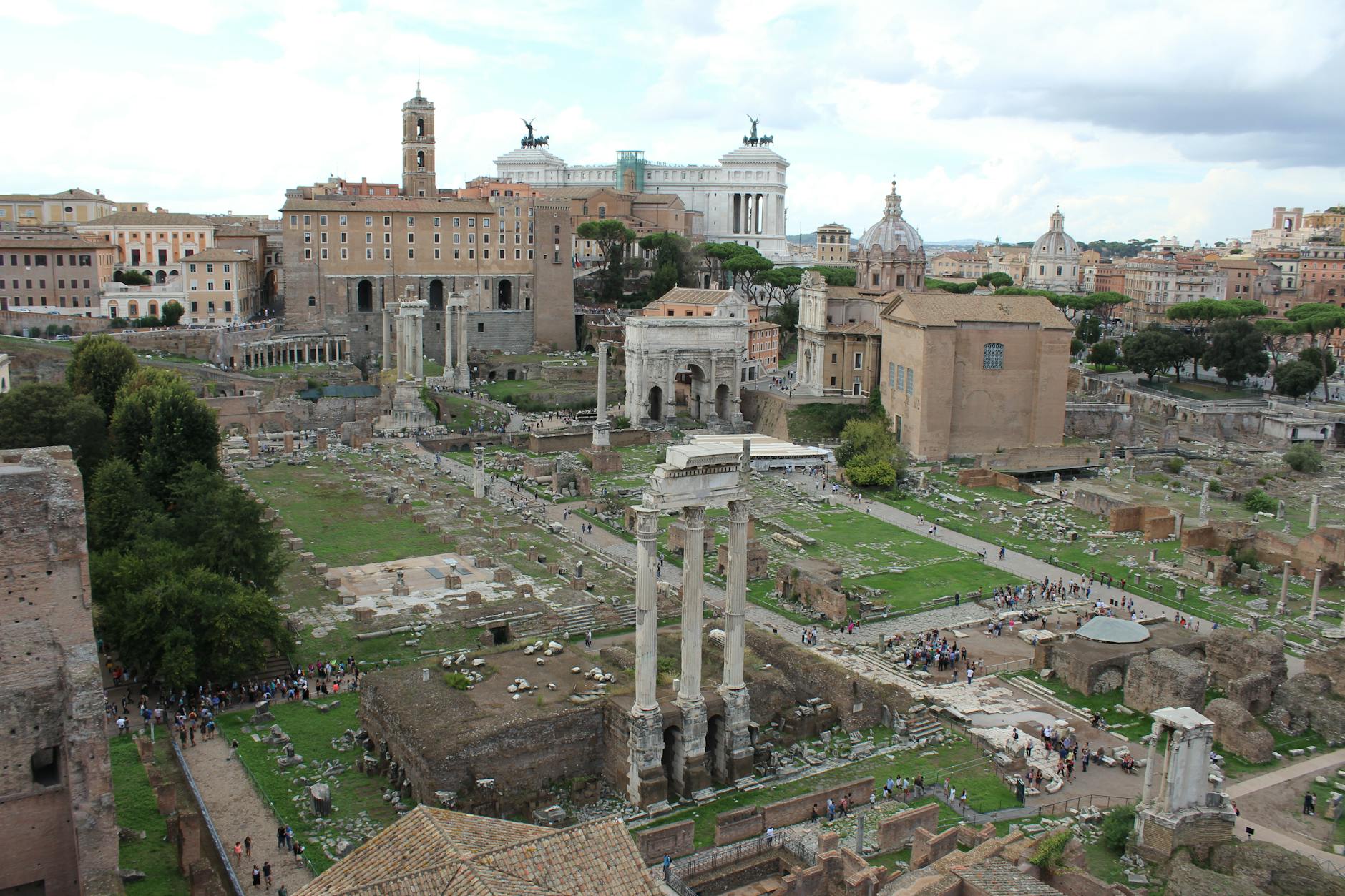
In 133 BC, a Roman tribune named Tiberius Gracchus stood before the Roman assembly and made an argument that would have gotten him trending. The rich had stolen the public land, he said. The soldiers who built Rome's empire came home to find nothing waiting for them. The Senate was corrupt, the system was rigged, and the only solution was to bypass the normal channels entirely and take the question directly to the people.
He was killed by a mob of senators before the year was out. His brother Gaius tried the same approach a decade later and died the same way. But the template they established — the specific sequence of moves, the emotional logic, the way power gets accumulated and then spent — has been replicated with uncanny precision in almost every major populist episode in recorded history.
At Longtime Human, we've been staring at five thousand years of human behavior long enough to notice when something isn't a coincidence. This is not a coincidence. There is a playbook, it is old, and once you see the moves you cannot unsee them.
Why a Playbook Exists at All
Before we get into the moves themselves, it's worth asking why the pattern is so consistent. The answer isn't that demagogues study each other, though sometimes they do. It's that the playbook is a natural fit to the hardware.
Human beings are tribal, hierarchy-sensitive, and acutely tuned to fairness violations. We respond strongly to narratives that organize the world into us and them, to leaders who demonstrate dominance through defiance of existing authority, and to the feeling — regardless of whether it's accurate — that we have been cheated by people who should have protected us. Any political actor who understands those levers, consciously or intuitively, will tend to pull them in the same order, because the order is dictated by the psychology of the audience, not the creativity of the performer.
The playbook isn't a conspiracy. It's an exploit.
Move One: Name the Enemy With Precision
The first move is identification. Not vague dissatisfaction with "the system" — that's too abstract to generate heat. The successful populist names a specific, recognizable group that the audience already suspects: the bankers, the elites, the immigrants, the establishment, the globalists, the deep state. The label matters less than the specificity.
The Gracchi named the senatorial landholding class. Huey Long, who ran Louisiana like a personal empire through the 1930s, named Standard Oil and "the interests" of New Orleans. William Jennings Bryan named Wall Street and the gold standard's defenders with such rhetorical precision that his 1896 "Cross of Gold" speech is still studied in political science classes. In each case, the enemy isn't just corrupt — they're corrupt in a way that directly explains your specific suffering. That's the mechanism. The named enemy converts free-floating economic anxiety into targeted grievance.
Move Two: Establish Sole Legitimacy
Once the enemy exists, the populist leader must establish that they alone are positioned to fight it. This requires a particular kind of credential — not expertise or experience, which are establishment markers, but authenticity. The leader must be of the people in some demonstrable way, or must have sacrificed something to stand with them.
Long wore cheap suits and spoke in Louisiana backwoods slang even after he became governor. Andrew Jackson made his frontier background and his hatred of the Second Bank of the United States the twin pillars of an identity that positioned him as the authentic American against the monied East. Julius Caesar, before he crossed the Rubicon, spent years cultivating a reputation as the senator who actually showed up to the funerals of ordinary Romans.
The credential is always constructed, but it has to feel earned. The audience is not naive — they're choosing to believe it because the alternative, trusting the existing system, has already failed them in some tangible way.
Move Three: Attack the Referee
The third move is the one that separates the serious operator from the protest candidate. At some point, the populist leader must delegitimize the institutions that would normally constrain them: the courts, the press, the electoral process, the professional class, the bureaucracy. This isn't optional. It's load-bearing.
The reason is structural. Any leader who gains power through anti-establishment energy will eventually face institutional resistance. If the institutions are still considered legitimate by the audience, that resistance can stop the movement. If the institutions have been pre-discredited, resistance reads as confirmation of the conspiracy.
The Gracchi attacked the Senate's procedural authority directly — Tiberius had a fellow tribune removed from office mid-vote, an almost unprecedented act, by arguing that a tribune who opposed the people's will was no longer a legitimate tribune. Long routinely ignored Louisiana's legislature when it inconvenienced him, governing by executive order and daring anyone to stop him. The pattern repeats: the referee has to go before the final whistle.
Move Four: Create Urgency That Forecloses Deliberation
Democratic deliberation is slow by design. It requires time, competing voices, and the willingness to reach outcomes that nobody loves completely. Populist politics is structurally allergic to all three of those things.
The fourth move is the manufacturing of crisis — real or amplified — that makes normal deliberative speed seem like complicity. "We don't have time for debate" is the sentence. The crisis might be genuine (the Gracchi were responding to real land inequality and real veteran poverty) or it might be constructed, but its function is the same: to make the audience feel that pausing to think is a luxury they cannot afford.
This is where historians watching from the outside can usually see the inflection point clearly, even when participants cannot. The moment a political movement begins arguing that scrutiny itself is dangerous, the fourth move is in progress.
Move Five: Distribute Enough Real Goods to Lock In Loyalty
Here's the move that distinguishes the lasting populists from the ones who flame out: they deliver something tangible, at least to their core constituency, early enough to create a loyalty that survives later failures.
Long built roads, hospitals, and schools in Louisiana at a scale the state had never seen. He provided free textbooks to schoolchildren. His approval ratings in rural Louisiana remained high even as the corruption of his machine became undeniable, because the roads were real and the textbooks were real and people remembered what the state looked like before him. The Gracchi actually passed land redistribution legislation that benefited real Roman farmers. Caesar built his loyalty through years of military campaigns that made his soldiers wealthy.
The goods are real. The transaction is real. This is why purely cynical readings of populist movements miss something important — the leader is not only manipulating the audience. They are also, partially, serving them. That's what makes the loyalty durable and the pattern so hard to interrupt.
Move Six: Make the Crisis Personal
The final move is the one that closes the loop. The leader must, at some point, make the political conflict about their own survival — and by extension, the survival of everyone who has attached their identity to the movement. An attack on the leader becomes an attack on the people. A legal challenge becomes an attempted coup. A lost election becomes a stolen one.
This move is the most dangerous because it removes the off-ramp. Normal politics has exits: you lose an election, you go home, the system continues. When the leader's personal fate and the movement's fate have been fused, losing becomes existential. And movements that cannot accept losing tend to find other ways to keep playing.
The Part Where the Data Gets Uncomfortable
Here's what five thousand years of evidence actually shows: the playbook usually works, at least in the short term. Tiberius Gracchus was murdered, but the land reforms passed. Huey Long was assassinated, but his political machine ran Louisiana for decades after his death. The leaders who run this sequence through to completion tend to either transform the system permanently or destabilize it badly enough that the transformation happens anyway, just messier.
The historical off-ramps that actually worked share a common feature: they happened at Move Two or Move Three, before the loyalty was locked and before the referee was fully discredited. Institutions that maintained enough credibility to enforce norms, press that remained trusted enough to document what was happening, and opposition that named the moves in real time rather than waiting for the crisis to become undeniable — those are the variables that changed outcomes.
The playbook is not destiny. But it does have a clock, and the data suggests it runs faster than most people expect.