The Soft Purge: Making People Fire Themselves Has Always Been the Cleanest Option
The Art of Constructive Dismissal
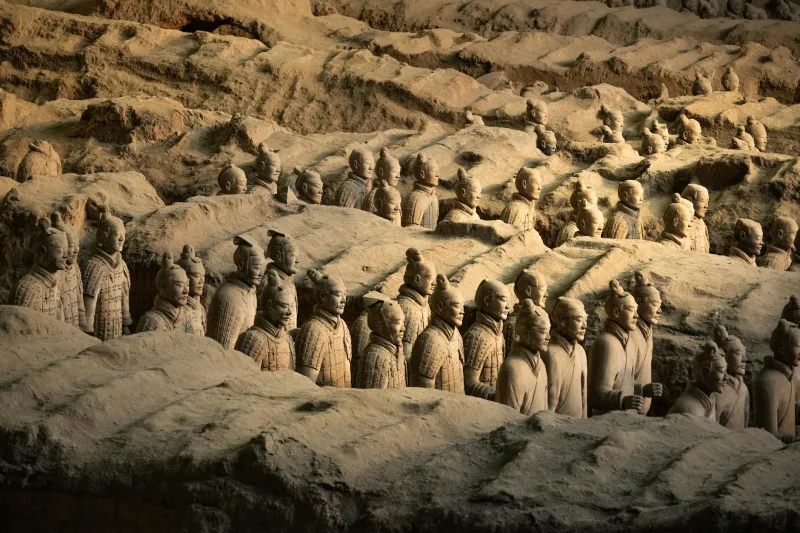
In Han Dynasty China, when an emperor wanted to remove a troublesome official but couldn't afford the political cost of open dismissal, he would promote them. Not to a better job — to a more prestigious title with no actual power. The official would be given a beautiful office, ceremonial duties, and the hollow respect of a meaningless position until they understood the message and resigned "to spend more time with family."
 Photo: Han Dynasty China, via www.kindpng.com
This wasn't cruelty disguised as kindness. It was a sophisticated management technology that let rulers remove problems while maintaining plausible deniability. The targeted official couldn't complain about being mistreated — they'd been promoted! The emperor's other officials couldn't worry about arbitrary dismissals — no one had been fired! Everyone could pretend the system was working normally while it quietly digested another inconvenient person.
Five thousand years later, the promotion-to-nowhere remains one of corporate America's most reliable tools. The product manager who asks too many questions about user privacy gets "elevated" to a strategic planning role with no reports and no budget. The engineer who keeps pointing out technical debt gets transferred to a "special projects" team that never ships anything. The marketing director who won't inflate user metrics gets moved to "partnership development" — a job that exists mainly to keep them away from real marketing decisions.
The Psychology of Voluntary Exile
What makes the soft purge so effective isn't the specific tactics; it's how it exploits basic human psychology. People can tolerate being disliked, but they can't tolerate being irrelevant. The Han Dynasty official who got kicked upstairs didn't quit because the work was hard — he quit because the work didn't matter.
Roman bureaucrats perfected this understanding. When they wanted to remove someone from the imperial administration, they would transfer them to positions that were technically important but practically isolated. Managing grain supplies in a distant province was crucial work, but it meant exile from the political networks that gave a career meaning. Most officials would find excuses to return to private life rather than accept irrelevance.
 Photo: Roman bureaucrats, via www.vikingtidsmuseet.no
The modern tech worker experiences the same psychological pressure. Getting moved off the core product team to work on "developer tools" or "internal efficiency" feels like professional death, even when the salary stays the same. The work might be objectively important, but it's not where decisions get made or careers get built. The isolation does what direct confrontation couldn't: it makes staying feel worse than leaving.
Manufacturing Voluntary Departures
The genius of the soft purge is how it transforms organizational problems into personal choices. Instead of the company firing someone, the person chooses to leave. This protects the institution from legal liability, public criticism, and internal morale problems while achieving the same result as a direct dismissal.
Byzantine court officials developed elaborate protocols for encouraging unwanted colleagues to seek other opportunities. They would exclude them from important meetings, route critical information around them, and gradually transfer their responsibilities to other people. The target would find themselves attending meetings where nothing relevant was discussed, managing projects that had been quietly cancelled, and reporting to supervisors who had been instructed to minimize their involvement.
 Photo: Byzantine court, via i.ytimg.com
The beauty was that none of these actions were technically hostile. Missing one meeting could be an oversight. Losing one project could be a reorganization. Being excluded from one decision could be a scheduling conflict. But the accumulation of small slights created an unmistakable message: you don't belong here anymore.
Modern organizations use identical tactics. The startup founder who's being pushed out finds that board meetings get scheduled when they're traveling. The VP who's fallen out of favor discovers that their budget requests need additional approvals that other departments don't require. The senior engineer notices that their code reviews are taking longer to approve and their project proposals are getting stalled in committee.
The Plausible Deniability Machine
What protects the soft purge from legal challenge is its inherent ambiguity. When someone gets fired, they can point to a specific moment when their employment ended. When someone gets soft-purged, they can only point to a pattern of small disappointments that individually look like normal business operations.
Medieval guilds used this ambiguity to remove members who violated unwritten rules. Instead of formal expulsion proceedings, they would gradually exclude the problematic member from lucrative contracts, important social events, and training opportunities. The guild could always claim these were business decisions based on merit or availability. The member could never prove deliberate exclusion, only a series of unfortunate coincidences.
This is why modern employment lawyers struggle with constructive dismissal cases. Proving that someone was deliberately pushed out requires demonstrating intent behind actions that have legitimate explanations. The employee who claims they were forced to quit has to convince a jury that missing meetings and lost responsibilities were part of a coordinated campaign rather than normal workplace friction.
Why Targets Rarely Fight Back
The soft purge works because it creates a no-win situation for its targets. Fighting back requires proving that normal-seeming business decisions were actually personal attacks. This makes the target look paranoid and difficult — exactly the kind of person an organization would want to remove.
Chinese court officials who complained about being sidelined were seen as entitled and disruptive. Roman bureaucrats who protested their transfers were viewed as insubordinate. The very act of resistance confirmed that they deserved their treatment.
Modern employees face the same trap. The product manager who pushes back against being moved to a strategic role looks like they're refusing a promotion. The engineer who complains about being transferred to a different team appears to be resistant to change. The executive who objects to having their responsibilities redistributed seems territorial and uncooperative.
This is why most soft purge targets eventually cooperate with their own removal. Fighting the process requires energy, political capital, and social support that the process itself is designed to eliminate. It's easier to accept the narrative that you're choosing to leave for better opportunities than to wage a war you're almost certain to lose.
The Institutional Memory
The remarkable thing about the soft purge is how consistently it gets reinvented across different organizations and time periods. There's no training manual for constructive dismissal, no corporate handbook that explains how to make someone quit. Yet the same tactics appear everywhere from ancient Chinese bureaucracies to modern Silicon Valley startups.
This suggests that the soft purge isn't a learned behavior but an emergent property of hierarchical organizations. When direct confrontation is costly and firing is complicated, humans naturally discover ways to make problems solve themselves. The specific methods vary by culture and context, but the underlying pattern remains constant: isolation, irrelevance, and the gradual withdrawal of institutional support until departure becomes the path of least resistance.
Understanding this pattern doesn't make it easier to resist, but it does make it easier to recognize. The next time you find yourself mysteriously excluded from important decisions or transferred to a role that feels like organizational Siberia, remember that you're experiencing a management technology that's older than writing itself. You're not the first person it's happened to, and you won't be the last.
The soft purge has survived five thousand years of political evolution because it works exactly as designed: it removes problems while protecting institutions. The only thing that's changed is that we've gotten better at pretending it's not happening.