When Money Melts Away: Why Every Inflation Crisis Follows the Same Human Playbook
The Same Story, Different Currency
When your money starts buying less bread than it did last month, your brain doesn't reach for economic theory. It reaches for the same survival instincts that kicked in when Roman citizens watched their silver denarii turn into copper-plated fakes, when Germans needed wheelbarrows full of marks to buy milk, and when Americans in the 1970s saw their paychecks shrink against grocery bills.
The human response to inflation hasn't changed in 2,000 years. We just tell ourselves different stories about why it's happening.
Rome's Copper Crisis and the Birth of Economic Anxiety
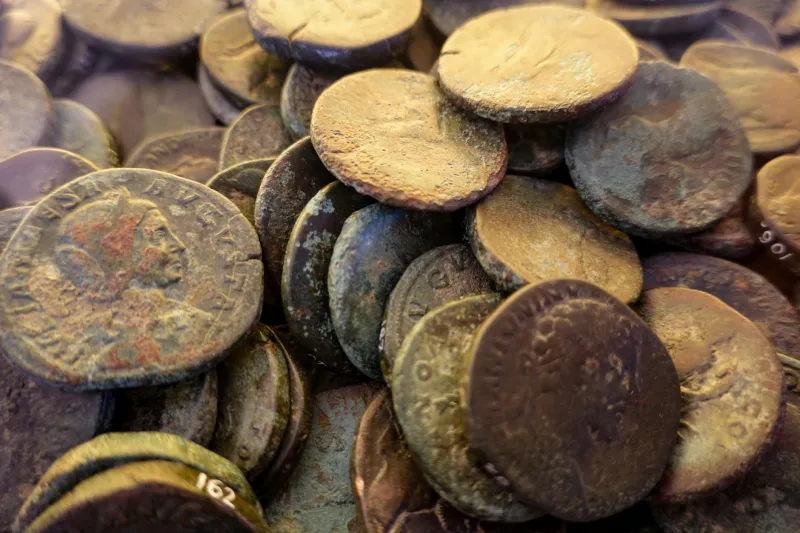
In 260 AD, Emperor Gallienus faced a familiar problem: too many wars, not enough money. His solution was equally familiar—debase the currency. The silver denarius, once 83% pure silver, became a copper coin with a thin silver wash that rubbed off in your pocket.
Roman citizens didn't need economic textbooks to understand they were being robbed. They hoarded the old silver coins, spent the new copper ones as fast as possible, and blamed everyone from greedy merchants to foreign conspirators to the emperor himself. Sound familiar?
Pliny the Younger wrote letters complaining about "the greed of traders who exploit our misfortune." Roman graffiti from Pompeii includes price complaints that could have been carved yesterday: "Bread costs too much!" and "The bakers are thieves!"
The psychological pattern was set: when money loses value, people assume someone is stealing from them. And they're usually right—just not about who.
Germany's Wheelbarrow Economy
Fast-forward to 1923 Weimar Germany, where inflation moved so fast that restaurants changed menu prices during dinner. A loaf of bread that cost 250 marks in January cost 200 billion marks by November.
German citizens responded exactly like Romans had 1,700 years earlier. They hoarded anything with real value—food, foreign currency, even postage stamps. They blamed Jewish bankers, foreign speculators, and the government (in that order). They spent their paychecks within hours of receiving them because waiting until tomorrow meant losing half their value.
One German housewife's diary entry could have been written by a Roman matron: "I no longer trust any authority. They have stolen our future with their lies about money."
The human brain, faced with currency collapse, activates the same defensive patterns it evolved for resource scarcity: hoard what's valuable, spend what's worthless, and find someone to blame.
America's Stagflation Nightmare
When inflation hit double digits in 1970s America, the response followed the ancient script with modern variations. Instead of hoarding silver coins, Americans bought gold, real estate, and collectibles. Instead of blaming foreign tribes, they blamed OPEC, unions, and politicians.
A 1979 Gallup poll found that 73% of Americans believed inflation was caused by "corporate greed" and "government mismanagement"—the same scapegoats Romans identified, just updated for the industrial age. People interviewed during gas lines used language that echoed Weimar diaries: "I don't trust anyone anymore" and "They're stealing our savings."
President Carter's "malaise" speech acknowledged what historians could have told him: inflation creates a crisis of confidence that runs deeper than economics. When money becomes unreliable, people lose faith in everything.
The Modern Inflation Playbook
Today's inflation anxiety follows the identical pattern. Americans are hoarding cash, buying crypto, and investing in real assets. They're blaming corporate greed, government spending, and foreign manipulation. Social media amplifies the ancient tendency to find villains, but the underlying psychology is unchanged.
A 2023 Federal Reserve survey found that 68% of Americans believe inflation is caused by "corporate price gouging"—almost identical to Roman complaints about greedy merchants. Reddit threads about inflation read like Weimar diary entries: "I can't afford anything anymore" and "This system is rigged against us."
The difference isn't in human behavior—it's in our tools for understanding it. Romans had philosophy, Germans had political theory, and we have economic models. But none of these intellectual frameworks override the basic human response to currency debasement: panic, blame, and the search for someone responsible.
Why This Matters More Than Fed Models
Economists build complex models to predict inflation's effects, but they consistently underestimate the human element. They can calculate how currency debasement affects purchasing power, but they struggle to predict how it affects trust, social cohesion, and political stability.
History suggests that inflation's real damage isn't economic—it's psychological. When money becomes unreliable, people become unreliable too. They hoard, they speculate, they vote for extremists who promise simple solutions to complex problems.
The Romans eventually abandoned their debased currency entirely, leading to economic collapse. Weimar Germany's inflation crisis paved the way for political extremism. America's 1970s stagflation led to a complete restructuring of economic policy.
Understanding these historical patterns won't prevent future inflation, but it might help us recognize that our current anxiety isn't about data or policy—it's about human nature responding to an ancient threat in the same way it always has.
The Longest Human Story
When your grocery bill doubles, you're not experiencing a modern economic phenomenon. You're participating in a 5,000-year-old human story about trust, value, and survival. The Romans who hoarded silver coins, the Germans who burned marks for heat, and the Americans who waited in gas lines were all running the same psychological software you're running today.
The only difference is that we have their stories to learn from. The question is whether we're smart enough to read them.