Your 3 PM Meeting Was Always Going to Start at 3:15
That executive who's chronically fifteen minutes late to every meeting isn't disorganized. They're performing a dominance ritual that's been fine-tuned over five thousand years of human civilization. Making subordinates wait is one of the most reliable power moves ever invented, and it works exactly the same way whether you're a pharaoh keeping priests waiting in an antechamber or a startup CEO who "just needs to finish this one thing" before your scheduled call.
The waiting room isn't an accident of modern bureaucracy—it's a deliberate psychological weapon that turns time into hierarchy.
The Egyptian Innovation
Around 3000 BCE, Egyptian pharaohs figured out something that would make every middle manager jealous: the longer you make someone wait to see you, the more important you seem when they finally do. Palace records from the Old Kingdom describe elaborate protocols for managing audiences with the pharaoh, including specific waiting periods calibrated to the visitor's social rank.
 Photo: Egyptian pharaohs, via www.lolaapp.com
Low-level officials might wait days for an audience. Foreign ambassadors could expect to cool their heels for weeks. The message was unmistakable: your time belongs to me, and I'll give it back when I'm ready.
This wasn't inefficiency—it was strategy. Egyptian court protocols were designed around the principle that power is demonstrated not by what you do, but by what you can make other people do. And the easiest thing to make people do is wait.
The genius of the system was its scalability. Every level of the hierarchy could make the level below them wait, creating a cascade of controlled frustration that reinforced the entire social order. Your superior makes you wait, so you make your subordinates wait, and everyone learns their place in the cosmic pecking order.
Roman Morning Rituals
The Romans took Egyptian waiting culture and systematized it into a daily ritual called the salutatio. Every morning, clients would gather at their patron's house, sometimes before dawn, to pay their respects and hopefully receive some small favor or financial support.
The patron, meanwhile, would take their time getting dressed, eating breakfast, and generally making it clear that their morning routine took precedence over dozens of people standing around in togas. The later you arrived to greet your clients, the more important you appeared. The longer your clients waited, the more grateful they'd be when you finally acknowledged their existence.
Roman writers complained about this system constantly, but they also participated in it religiously. Pliny the Younger wrote letters griping about wasting hours waiting for audiences, then turned around and made his own clients wait just as long. The hypocrisy was the point—everyone understood they were participating in theater, but the show had to go on.
 Photo: Pliny the Younger, via www.timetravelrome.com
What made the Roman system particularly sophisticated was its integration with urban planning. The houses of important Romans were designed with specific spaces for waiting—atriums where clients could stand around feeling important enough to be there but not important enough to be seated. Architecture as power projection.
Medieval Refinements
Medieval courts perfected the art of strategic delay by adding layers of bureaucracy to the waiting process. You didn't just wait to see the king—you waited to see the chamberlain who would decide if you could wait to see the steward who might let you wait to see the king.
Each level of waiting served a psychological function. By the time you finally reached the throne room, you'd been conditioned to see the eventual audience as a tremendous privilege rather than a basic interaction between humans. The waiting didn't just demonstrate the king's importance—it manufactured your gratitude.
Medieval chronicles are full of complaints about the endless delays required to conduct any business at court. But they're also full of detailed descriptions of who got to skip the line and who didn't, because exceptions to the waiting ritual were themselves a form of currency. Being able to see the king immediately wasn't just convenient—it was a public demonstration of your special status.
The Venture Capital Evolution
Silicon Valley took ancient waiting protocols and optimized them for the attention economy. The modern VC meeting that starts twenty minutes late isn't a scheduling failure—it's a psychological conditioning exercise designed to remind entrepreneurs exactly who needs whom in the relationship.
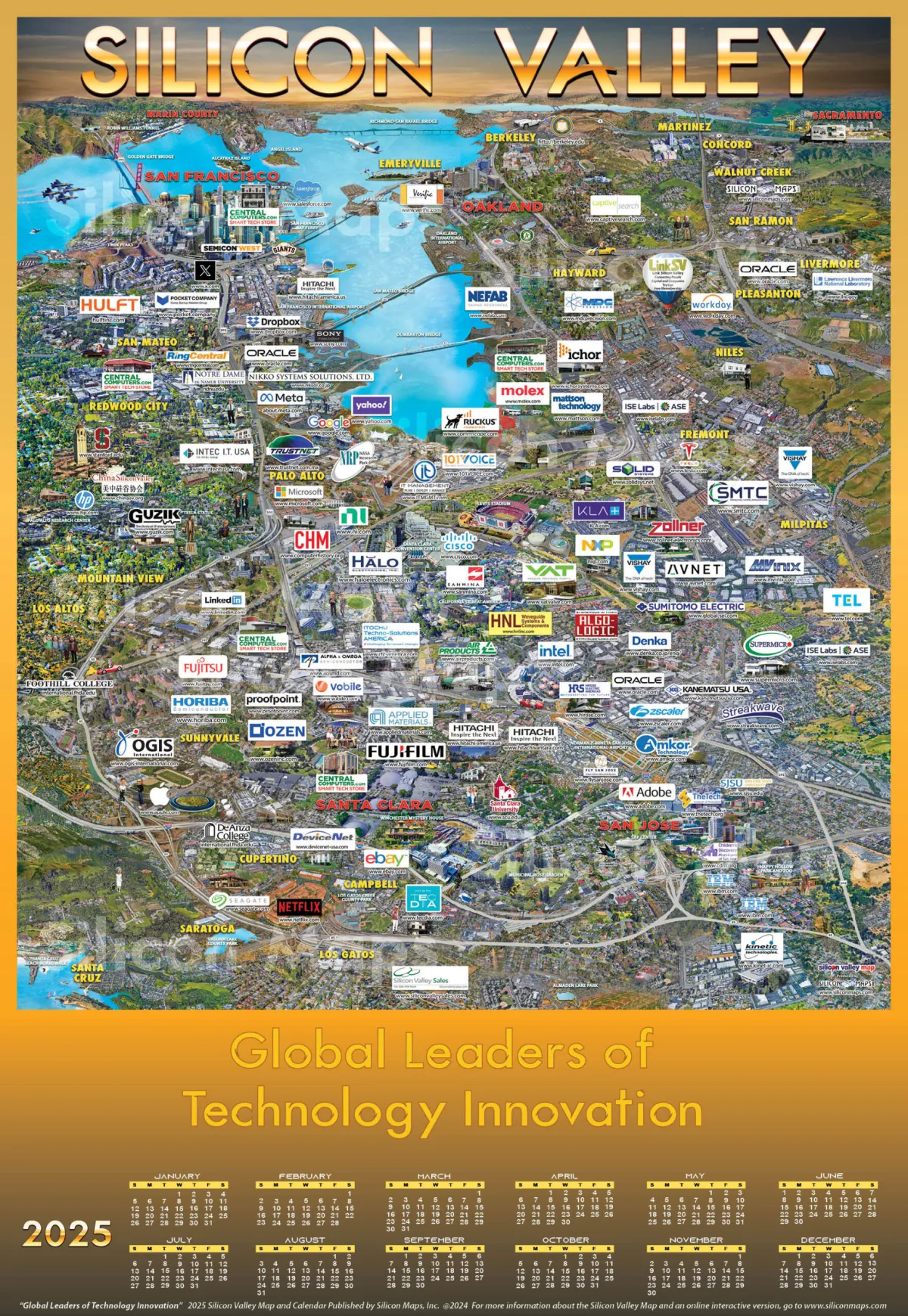 Photo: Silicon Valley, via siliconmaps.com
Tech culture has created increasingly elaborate rituals around controlled waiting. The "quick sync" that turns into a forty-minute delay. The Zoom meeting where the host joins late and immediately apologizes while making it clear they were doing something more important. The conference call where everyone waits for the "decision maker" who may or may not show up.
Each delay serves the same function it did in ancient Egypt: it establishes hierarchy through time control. The person who can make others wait is demonstrating that their time is more valuable than everyone else's combined.
What's particularly modern about tech waiting culture is its integration with productivity theater. The executive who keeps you waiting isn't just being rude—they're "crushing it," "moving fast and breaking things," or "optimizing for high-leverage activities." The delay becomes evidence of their importance rather than their disrespect.
The Psychology of Controlled Time
Waiting works as a power move because it exploits fundamental human psychology that hasn't changed since we lived in caves. Time is the one resource everyone has in equal measure—twenty-four hours a day, no exceptions. When someone can arbitrarily control how you spend that time, they're exercising a form of power that feels almost supernatural.
The psychological impact is amplified by uncertainty. If you knew exactly when the meeting would start, you could plan accordingly. But strategic lateness keeps you in limbo, unable to do anything else because the important thing might happen at any moment. Your attention becomes completely captured by someone else's schedule.
This is why waiting rooms exist in the first place. They're not just spaces to store people until they're needed—they're psychological preparation chambers where visitors learn to see the eventual interaction as a privilege rather than an exchange.
When Waiting Backfires
Of course, making people wait can backfire spectacularly, and history is full of examples of leaders who pushed the strategy too far. Roman emperors who kept senators waiting too long sometimes found themselves on the wrong end of a conspiracy. Medieval kings who made their nobles cool their heels for days occasionally discovered that bored aristocrats had time to plot rebellions.
In modern business, the same dynamics apply. Companies that systematically waste their employees' time through unnecessary meetings and artificial delays often find themselves dealing with higher turnover and lower morale. The power move that's supposed to demonstrate control can end up highlighting incompetence instead.
The key is calibration. A fifteen-minute delay signals importance. A two-hour delay signals disorganization. The most effective practitioners of strategic lateness make people wait just long enough to establish dominance without crossing the line into obvious disrespect.
The Democratic Resistance
Interestingly, American culture has always had a complicated relationship with waiting-based power moves. The democratic ideal suggests that everyone's time should be equally valuable, which conflicts with hierarchical systems that use time control to establish rank.
This tension shows up in uniquely American innovations like "fashionably late," where arriving exactly on time is considered slightly rude, but arriving too late is also problematic. We've created a narrow window of acceptable lateness that lets people demonstrate their importance without being overtly hierarchical about it.
The result is a culture where everyone is constantly performing subtle time-control games without acknowledging that's what they're doing. The meeting that starts "when everyone gets here" but somehow never includes the most junior person in that calculation. The conference call where people join "whenever" but the real discussion doesn't start until the senior stakeholders arrive.
The Remote Work Revolution
Zoom meetings have created new opportunities for ancient waiting rituals. The virtual waiting room is literally called a waiting room, making the power dynamic more explicit than ever. The host controls not just when the meeting starts, but who gets admitted and in what order.
Remote work has also democratized some aspects of time control. When everyone's working from home, it's harder to use physical presence as a power signal. The executive who used to make people wait in their office now has to find new ways to demonstrate importance in a world where everyone's background is equally artificial.
But the fundamental psychology hasn't changed. The Slack message that goes unanswered for hours, the email that gets a response days later, the video call where someone joins late and doesn't apologize—these are all modern versions of the ancient practice of using time control to establish hierarchy.
The Eternal Queue
The waiting room will never disappear because it serves too many psychological functions to abandon. It's not just about managing schedules—it's about managing expectations, demonstrating value, and reinforcing social hierarchies that might otherwise be questioned.
Every time you sit in a waiting room, you're participating in a ritual that connects you to every petitioner who ever stood in a pharaoh's antechamber, every client who ever shivered in a Roman atrium, and every entrepreneur who ever checked their phone in a VC's lobby. The technology changes, but the psychology remains constant.
Your 3 PM meeting was always going to start at 3:15, not because of poor planning, but because making you wait for fifteen minutes is the most efficient way to remind you who's really in charge. It's been working for 5,000 years, and it's not going to stop working now.