When your CEO sends out another email about "the irreplaceable value of in-person collaboration," they're not innovating—they're plagiarizing from a management manual that's literally thousands of years old. The return-to-office push isn't about productivity, culture, or innovation. It's about the oldest form of workplace control in human history: if you can see them, you can control them.
Ancient Egypt Invented the Open Office (And It Sucked Then Too)
The earliest known office buildings weren't corporate headquarters—they were Egyptian scribal schools where government administrators trained the next generation of bureaucrats. But here's what's fascinating: Egyptian records show that scribes actually did most of their creative work at home, coming to the central buildings mainly for meetings and collaborative projects.
 Photo: Ancient Egypt, via www.egypttoursportal.com
So why did pharaohs insist on massive central complexes? Simple: supervision and status. Having hundreds of scribes working under one roof sent a clear message about state power, and it made it much easier to monitor who was actually working versus who was maybe spending their afternoons writing poetry instead of tax records.
Egyptian supervisors developed elaborate systems for tracking productivity that would make modern middle managers weep with envy. They literally invented the timesheet. Not because remote work didn't work—it worked fine. But because distributed workers were harder to control.
Roman Workshops Perfected the Productivity Theater
Jump forward to the Roman Empire, where workshop owners discovered that cramming artisans into shared spaces had nothing to do with efficiency and everything to do with psychological dominance. Roman pottery workshops, metalworking shops, and textile operations could have been distributed across individual homes—and many were, initially.
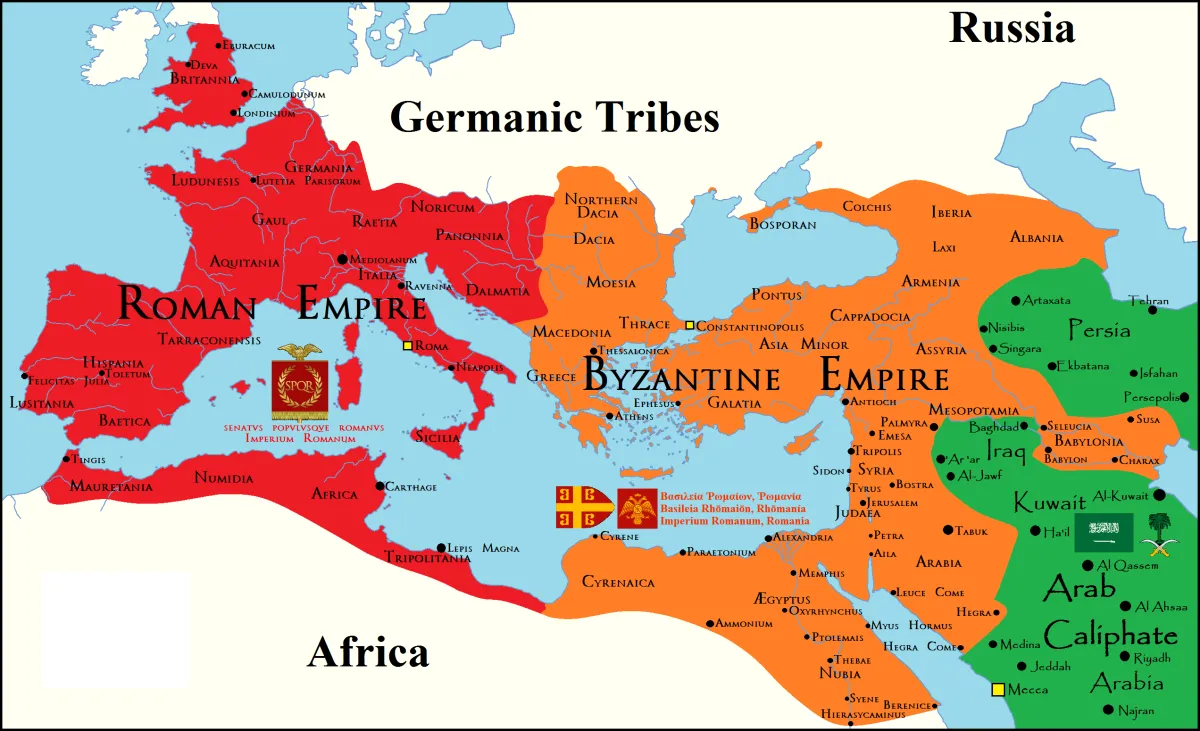 Photo: Roman Empire, via i.redd.it
But successful Roman businessmen quickly learned that centralized workshops offered something more valuable than productivity: the ability to create artificial scarcity and competition. When workers could see each other's output in real-time, they naturally pushed themselves harder. When they were isolated in individual workshops, they worked at their own pace.
Roman workshop owners wrote extensively about the benefits of "shared knowledge" and "collaborative innovation," but their private correspondence reveals the real motivation: "Workers who can see each other work faster, and workers who work faster make me richer."
Medieval Guilds Turned Proximity into Surveillance
Medieval craft guilds took this strategy to its logical extreme, requiring all guild members to work in designated areas where master craftsmen could monitor their techniques, productivity, and—most importantly—their loyalty. The guild system wasn't about preserving quality or sharing knowledge. It was about preventing competition and maintaining control over trade secrets.
Guild masters insisted that "true craftsmanship" could only be developed through direct supervision and in-person mentorship. But guild records show a different story: apprentices who worked remotely often developed more innovative techniques, precisely because they weren't being constantly corrected and micromanaged.
The guild system's obsession with centralized workshops had nothing to do with quality control and everything to do with information control. If you could see what everyone was working on, you could prevent anyone from developing improvements that might threaten your market position.
The Industrial Revolution Made It Official
The factory system didn't emerge because centralized production was more efficient—early textile work was often more productive when done in individual homes. Factories emerged because they gave owners unprecedented control over workers' time, movement, and output.
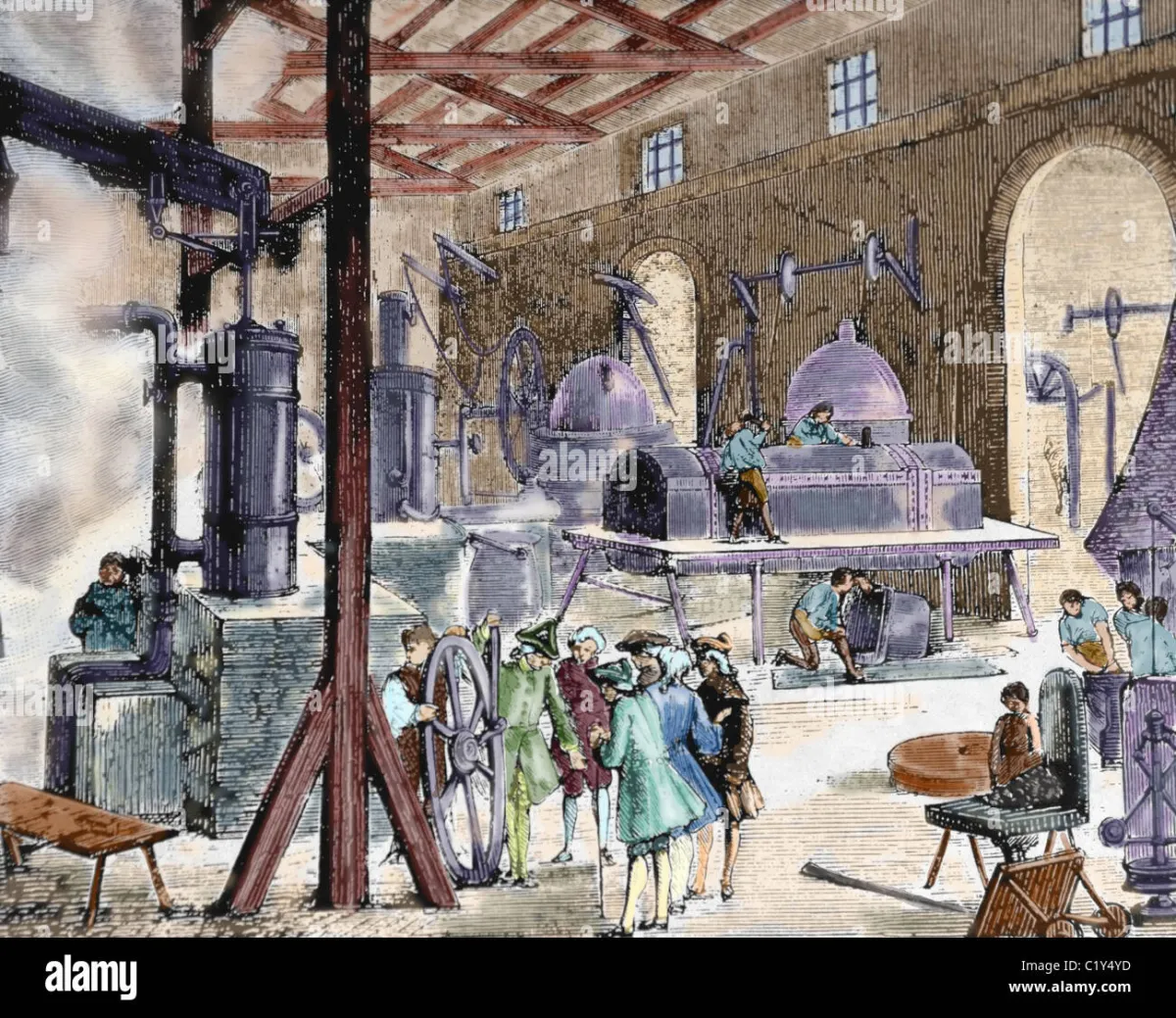 Photo: Industrial Revolution, via c8.alamy.com
Factory owners could have distributed spinning wheels and looms to workers' homes, paid by the piece, and achieved similar productivity levels. But that would have meant giving up control over the production process. Factories allowed owners to dictate not just what was produced, but exactly how it was produced, when, and by whom.
The "efficiency" of factory production wasn't about better technology—it was about better surveillance.
Modern Offices Are Just Factories for Information Work
Fast-forward to the 20th century, when corporations applied the factory model to knowledge work. The open office wasn't designed to improve collaboration—studies from the 1960s onward consistently showed that open offices reduced productivity, increased stress, and made workers sick more often.
But open offices weren't designed for workers. They were designed for managers. Just like Roman workshops and medieval guilds, modern offices exist to make supervision easier and to create artificial competitive pressure through visibility.
Every study on remote work productivity shows the same results that Egyptian scribes could have predicted 4,000 years ago: most knowledge workers are more productive when they control their own environment and schedule. But productivity was never really the point.
The Real Reason for Return-to-Office Mandates
When CEOs talk about "culture" and "collaboration," they're using the same euphemisms that workshop owners and guild masters have used for millennia. What they actually mean is:
Control over time: If you're in the office, they know you're not running errands, taking care of family, or working a side hustle during business hours.
Status display: A full office signals success to clients, investors, and competitors in the same way that a crowded medieval workshop signaled prosperity.
Information surveillance: It's much easier to monitor who's working on what, who's talking to whom, and who might be looking for other opportunities when everyone's in the same building.
Cultural compliance: Physical presence makes it easier to enforce unwritten rules about dress, behavior, and attitude that maintain hierarchical relationships.
Why Remote Work Threatens Ancient Power Structures
Remote work doesn't just change where people work—it fundamentally shifts the power dynamic between employers and employees. When work is measured by output rather than time spent in a chair, when supervision becomes results-focused rather than behavior-focused, when workers control their own schedules and environments, traditional management hierarchies start to crumble.
This is exactly what happened in pre-industrial economies whenever workers gained too much independence. Textile workers who controlled their own production schedules started demanding higher piece rates. Craftsmen who worked from home began developing their own client relationships. Scribes who worked remotely started offering their services to multiple employers.
Every time in history that workers gained spatial independence, they eventually gained economic independence. And every time, employers found ways to pull them back under direct supervision.
The Same Fight, Different Century
The current return-to-office push isn't about the future of work—it's about the past. It's an attempt to restore traditional power relationships that remote work disrupted. When your boss insists that "innovation happens in person," they're making the same argument that Roman workshop owners made 2,000 years ago.
The difference is that we now have 5,000 years of data showing that this argument has never been about productivity. It's always been about control.
Human psychology hasn't changed. Managers still want to see their workers working, and workers still prefer autonomy when they can get it. The technology has evolved, but the fundamental tension between supervision and independence remains exactly the same.
Your CEO isn't trying to build a better company culture. They're trying to build a better castle, with you inside it where they can keep an eye on you. Just like every boss in history.