Your Annual Review Is Accountability Theater: How 5,000 Years of Performance Evaluations Have Protected Everyone Except the Performer

The Mandate of Heaven Came With Paperwork
Ancient Chinese emperors didn't just fire incompetent officials—they documented their incompetence first. Elaborate performance evaluation systems tracked everything from tax collection efficiency to moral character, creating paper trails that justified demotions, transfers, and executions. The reviews weren't designed to improve performance; they were designed to prove the emperor's decisions were based on objective merit rather than personal whim.
Your last performance review operated on identical logic. The rating scale, the competency framework, the 360-degree feedback—it's all institutional cover for decisions your manager made months ago. The process exists to transform subjective judgments into seemingly scientific assessments, protecting the organization from accusations of bias, favoritism, or arbitrary treatment.
When Assessment Becomes Weapon
Medieval guild masters perfected the art of using evaluations to eliminate competition. Apprentice assessments weren't just about skill—they measured loyalty, family connections, and willingness to maintain existing power structures. A technically perfect candidate could fail for "lacking proper guild spirit," while a mediocre craftsman with the right connections would pass with honors.
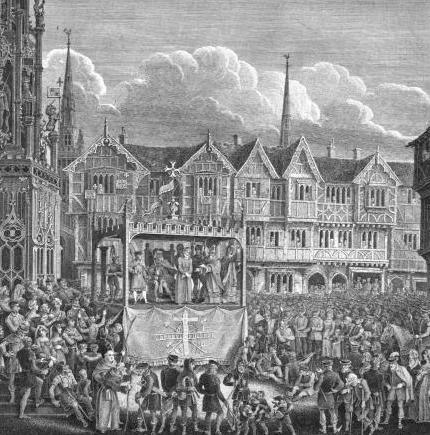 Photo: Medieval guild masters, via www.props.eric-hart.com
Modern performance reviews inherited this selective blindness. The criteria that actually matter—office politics, cultural fit, relationship with management—rarely appear on official evaluation forms. Instead, organizations measure easily quantifiable metrics that correlate poorly with real contribution but provide legal defensibility for personnel decisions.
This mismatch isn't accidental oversight; it's deliberate design. Formal evaluation systems work best when they obscure rather than illuminate the real reasons behind organizational choices. Transparency would eliminate their primary function: providing plausible deniability for subjective decisions.
The Ritual of Manufactured Fairness
Every performance review follows the same theatrical structure that Chinese mandarins established 2,000 years ago: formal criteria, standardized processes, documented outcomes, and appeals procedures that rarely overturn initial decisions. The elaborate ceremony creates an impression of systematic fairness while preserving complete managerial discretion.
Consider the timeline. Performance periods end, reviews get written, ratings get assigned, and then—mysteriously—budget constraints or reorganizations eliminate exactly the positions held by people who scored poorly. The evaluation didn't predict the layoffs; it provided retroactive justification for them.
This backward causation explains why performance review systems persist despite universal acknowledgment that they don't work. Managers hate conducting them, employees hate receiving them, and research consistently shows they fail to improve individual or organizational performance. Yet every company keeps doing them, following scripts that haven't changed since the Han Dynasty.
 Photo: Han Dynasty, via www.nationsonline.org
Why Bad Systems Never Die
The performance review survives because it solves a problem that has nothing to do with performance: how do institutions make subjective decisions while maintaining the appearance of objective process? Ancient bureaucracies faced identical challenges. Personal relationships, political calculations, and resource constraints drove most personnel decisions, but admitting this would undermine institutional legitimacy.
Formal evaluation systems provide the perfect solution. They create documentary evidence that decisions were based on measurable criteria rather than managerial preference. When someone gets fired, promoted, or passed over, the organization can point to numerical scores and standardized procedures rather than acknowledging the role of bias, budget pressures, or interpersonal dynamics.
This protective function explains why performance review systems become more elaborate and bureaucratic over time rather than simpler and more effective. Each additional form, rating scale, and approval layer provides another buffer between institutional decisions and potential legal challenges.
The Great Inversion
What's particularly insidious about performance evaluation theater is how it shifts responsibility from institutions to individuals. Ancient Chinese officials who failed their assessments were blamed for personal inadequacy rather than systemic dysfunction. Modern employees who receive poor reviews are similarly encouraged to focus on self-improvement rather than questioning organizational priorities or management competence.
This psychological sleight-of-hand transforms institutional failures into personal ones. When a department misses its targets, performance reviews identify which individuals "underperformed" rather than examining whether the targets were realistic, the resources adequate, or the strategy sound. The evaluation process systematically deflects attention from structural problems toward individual shortcomings.
The pattern repeats across centuries because it serves powerful psychological needs for everyone involved. Managers get to believe they're making objective decisions based on merit. Organizations get legal protection from discrimination claims. Even employees get the comfort of thinking their fate depends on measurable performance rather than arbitrary managerial whim.
The Performance Paradox
Here's the central irony: performance reviews persist precisely because they don't actually measure performance. If they did, they would force organizations to confront uncomfortable truths about resource allocation, strategic priorities, and management effectiveness. Instead, they measure compliance with bureaucratic processes, creating the illusion of accountability while protecting existing power structures.
Real performance evaluation would require admitting that most organizational outcomes depend on factors beyond individual control: market conditions, resource availability, strategic decisions made above the employee's pay grade. Formal review systems carefully avoid this acknowledgment, focusing instead on individual behaviors and attitudes that can be modified through personal effort.
This narrow focus isn't accidental—it's essential to the system's protective function. By treating organizational problems as collections of individual performance issues, review processes prevent systematic examination of institutional failures while maintaining the fiction that success and failure are distributed according to merit.
The Eternal Return
Every few years, organizations announce revolutionary changes to their performance management systems. They'll eliminate ratings, embrace continuous feedback, or adopt cutting-edge assessment technologies. These reforms invariably fail because they attempt to solve the wrong problem.
The real problem isn't that performance reviews are ineffective at measuring performance—it's that measuring performance effectively would undermine their actual purpose. Organizations need systems that provide legal defensibility for subjective decisions while maintaining employee buy-in for institutional authority. No amount of technological innovation can resolve this fundamental contradiction.
Five thousand years of evidence suggests this pattern will continue indefinitely. As long as institutions need to make personnel decisions while preserving the appearance of fairness, they'll create elaborate evaluation systems that obscure rather than illuminate the real reasons behind their choices. The performance review isn't broken—it's working exactly as designed.