Your College Degree Was Already Worthless in Ancient China

The First Diploma Mill Crisis
Your parents told you to get a college degree because it would guarantee a good job. Their parents told them the same thing. But this advice has been getting worse for a lot longer than anyone wants to admit—ancient Chinese scholars were already complaining about credential inflation during the Tang Dynasty, when too many people passed the imperial examinations and couldn't find government positions worthy of their education.
 Photo: Tang Dynasty, via blog.gys.cn
The psychological pattern is always the same: a scarce credential creates opportunity, opportunity drives demand, demand creates supply, and supply destroys the original value. We're not the first generation to discover that the piece of paper stops meaning anything when everyone has one.
When Everyone Could Read Latin
Roman rhetoric schools faced the same crisis by the 2nd century CE. What started as exclusive training for future senators and lawyers had become so popular that the empire was churning out more certified orators than it had courtrooms to fill. Graduates with impressive credentials found themselves competing for basic teaching jobs or working as scribes—roles that didn't require years of expensive education.
The Roman solution was predictably Roman: they created new, more exclusive credentials. Advanced rhetoric programs, specialized legal training, and imperial administrative academies all emerged as ways to re-create scarcity in an oversaturated market. Sound familiar?
This is the same arms race that turned bachelor's degrees into the new high school diplomas, master's degrees into the new bachelor's degrees, and created the PhD glut that has adjunct professors working three jobs to afford rent.
Medieval Universities: The Original Credentialing Bubble
By the 13th century, European universities were mass-producing trained theologians faster than the Church could create positions for them. The University of Paris alone was graduating hundreds of theology students annually, but there were only so many parishes, monasteries, and cathedral schools to go around.
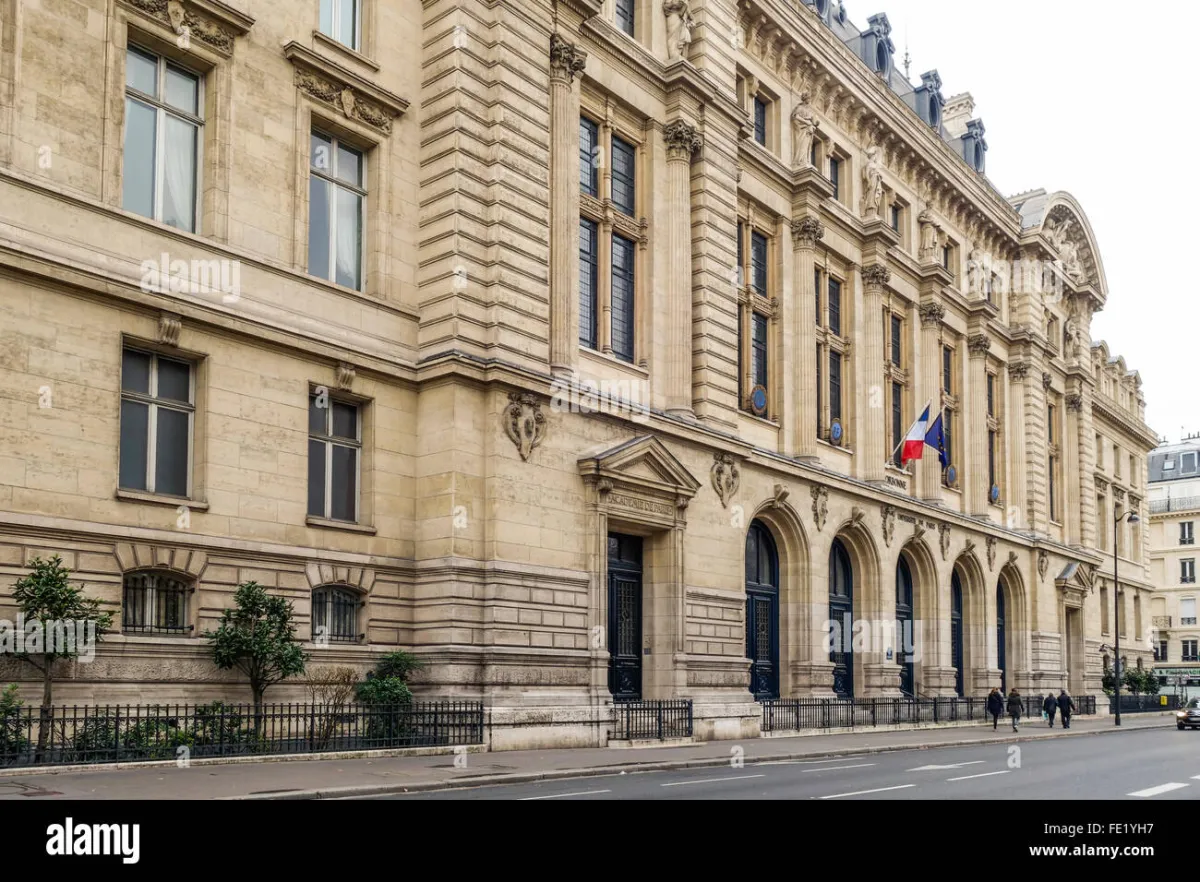 Photo: University of Paris, via c8.alamy.com
The surplus scholars didn't just disappear—they created an entirely new economy around their credentials. Private tutoring, manuscript copying, administrative work for nobles, and eventually the invention of new fields like natural philosophy (early science) all emerged as ways for over-educated clerics to monetize knowledge that the official economy couldn't absorb.
This pattern repeats every time a society creates more educated people than it has educated jobs for. The credentials don't disappear—they just get repurposed for work that doesn't actually require them.
The Examination Hell of Imperial China
China's imperial examination system, which ran for over 1,300 years, provides the clearest historical example of how credential inflation destroys itself. What began as a meritocratic way to select government officials gradually became a national obsession that consumed entire family fortunes and lifetimes.
By the Ming Dynasty, millions of men were spending decades preparing for exams that selected only a few thousand officials annually. The vast majority of test-takers never passed, but the social pressure to keep trying was enormous. Families would bankrupt themselves funding one son's endless examination attempts, believing that success would elevate the entire clan.
 Photo: Ming Dynasty, via img.haikudeck.com
The psychological toll was devastating. Chinese literature from this period is full of stories about scholars who spent their entire adult lives failing the same test repeatedly, too invested in the process to admit it wasn't working. The examination system had become more important than the jobs it was supposed to select people for.
Why Smart People Keep Making the Same Mistake
The reason credential inflation keeps happening is that it exploits a cognitive bias that hasn't changed in thousands of years. Humans are terrible at distinguishing between correlation and causation, especially when the stakes are high.
Successful people have credentials, so credentials must cause success. This logic feels airtight until everyone else figures it out and starts collecting the same credentials. Then the correlation breaks down, but by that point, entire industries have been built around selling and requiring the now-worthless certificates.
Ancient Chinese families kept funding examination attempts long after it became statistically obvious that their sons would never pass. Modern American families keep taking on student debt long after it became clear that most degrees don't lead to jobs that can pay for themselves. The psychology is identical.
The Signal Becomes Noise
Economists call this "signaling theory"—credentials work as long as they successfully signal something rare about the person who has them. But signaling only works when the signal is scarce. Once everyone can afford to send the same signal, it stops meaning anything.
Roman rhetoric training signaled intelligence and social status when only wealthy families could afford it. When the schools expanded and made the training accessible to the middle class, the credential lost its exclusivity and therefore its value. Employers couldn't use it to distinguish between candidates anymore.
This is exactly what happened to the bachelor's degree in America. It successfully signaled intelligence, persistence, and social class when only 10% of the population had one. Now that nearly 40% of American adults have bachelor's degrees, the credential has lost most of its signaling power.
The Search for New Scarcity
Every credential inflation cycle ends the same way: with a frantic search for new forms of artificial scarcity. When too many people have the basic credential, institutions create advanced versions, specializations, or entirely new requirements.
Medieval universities responded to the theology glut by creating new fields of study. Roman schools added years of specialized training. Chinese examination candidates started hiring private tutors and attending preparatory academies, creating a secondary education industry around the primary credential.
Modern America has done all of these things simultaneously. We've created graduate degrees, professional certifications, coding bootcamps, and an entire industry of credential-adjacent training programs. The underlying problem—too many people chasing too few jobs that actually require advanced education—never gets addressed.
The Inevitable Collapse
Credential bubbles always pop eventually, but not because institutions suddenly become rational. They collapse when the gap between credential cost and credential value becomes so obvious that even the most optimistic families stop buying in.
China's examination system finally ended in 1905, not because the government realized it was inefficient, but because Western-educated Chinese demonstrated that there were other paths to success. The system lost its monopoly on social mobility, and the bubble deflated almost overnight.
American higher education is facing a similar reckoning. As student debt loads become unpayable and graduates struggle to find work that requires their degrees, families are starting to question whether the investment makes sense. The credential inflation cycle is completing itself, just like it has dozens of times throughout history.
The only thing that changes is how long it takes people to notice that the emperor's new diploma isn't keeping anyone warm.