Some Debts Were Designed to Outlive You
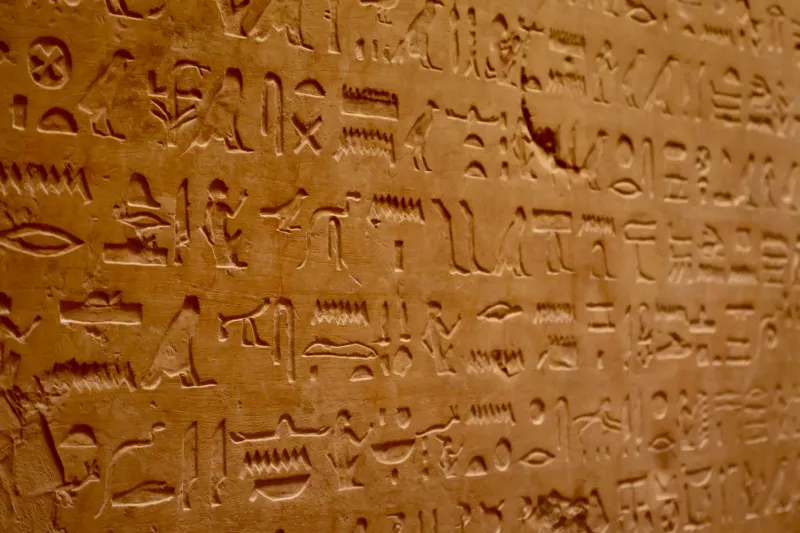
Here's a thing that happened constantly in ancient Mesopotamia: a farmer had a bad harvest. He borrowed grain from a wealthy neighbor or a temple administrator to get through the season. The interest rate—often somewhere between 20 and 33 percent—wasn't designed to be paid back from one good harvest. It was designed to be paid back over time. Maybe a long time. Maybe longer than one lifetime.
This wasn't an accident. The people setting those rates knew exactly what they were doing.
The Architecture of Permanent Debt
In the ancient Near East, debt-bondage was a formal legal institution. When a borrower couldn't pay, they could surrender their labor—or the labor of their children—to the creditor until the debt was cleared. In practice, with compound interest accumulating faster than a family could work it off, "until the debt is cleared" was a phrase that could stretch across generations.
Babylonian records from around 1800 BCE describe households where children were already listed as collateral before they were old enough to work. The debt existed before they did. They were born into an obligation they had no hand in creating, toward a creditor they'd never personally wronged.
Egypt ran a similar system. Temple granaries operated as the ancient world's version of creditors, and the records they kept were meticulous. Families who fell behind didn't just lose a season—they lost standing, mobility, and in many cases their legal right to leave a particular plot of land. The debt didn't imprison them physically. It just made everywhere else impossible.
Rome refined this further with nexum, a form of debt contract that allowed a creditor to claim the physical labor of a defaulting debtor. The Roman writer Livy describes the practice with visible discomfort—even for him, writing centuries after it was formally abolished, it read as a system where the poor existed to service the financial needs of the wealthy across generations. The abolition came in 326 BCE. The economic conditions that made it necessary did not.
What "Hereditary" Actually Means
When historians talk about hereditary poverty, it's easy to hear it as a metaphor—like, of course poor families tend to stay poor, that's just how resources work. But in the ancient world, it was often legally literal. Debt was property. It could be transferred, sold, and inherited. A creditor who died could pass your debt to his heirs. You now owed money to someone you'd never met, under terms you hadn't negotiated, for a loan that predated your birth.
This wasn't considered monstrous. It was considered accounting.
The Ptolemaic Egyptian bureaucracy—the administrative system that ran Egypt after Alexander the Great's successors took over—kept debt records with a precision that would impress a modern collections agency. Families who owed taxes or grain loans were tracked across multiple generations. The state knew who your grandfather owed and expected you to know it too.
What's striking, looking at this from a distance of a few thousand years, is how little the underlying logic has changed. The mechanics are different. The vocabulary is different. But the structure—where a financial obligation can attach itself to a family and compound faster than the family can earn—is not a modern invention.
The Jubilee Loophole
There's a counterargument here that's worth taking seriously: ancient societies sometimes had formal debt-relief mechanisms. The Mesopotamian misharum edicts were royal proclamations that periodically canceled certain categories of debt. The biblical concept of the Jubilee year—debt forgiveness every fifty years—comes from this same tradition. These weren't just idealistic religious ideas; they were practical tools for preventing the total collapse of the peasant class that everyone's economy depended on.
But notice what those mechanisms required: a king, or a god, to intervene from outside the system. The system itself didn't self-correct. Left alone, it compounded. Debt relief happened when someone with enough power decided the social cost of permanent debt-serfdom had gotten too high. It wasn't built into the loan.
Modern bankruptcy law is the secular descendant of the Jubilee—a legal escape valve that exists because someone eventually figured out that a debtor who can never recover is a drag on everything. The US bankruptcy code, for all its complexity, is essentially the same acknowledgment: some debts need to be dischargeable, or the alternative is worse.
The Part That Didn't Change
What ancient creditors understood—and what the data from five thousand years of lending confirms—is that debt has two modes. In the first mode, it's a bridge: someone needs resources now, they'll have them later, the loan smooths the gap. In the second mode, it's a trap: the terms are structured so that the borrower is always slightly behind, always paying, never quite clearing the balance.
Mode two is more profitable. It always has been.
Modern payday lending operates on a model that Babylonian grain lenders would recognize immediately. The interest rates are different in scale but identical in effect: they're calibrated so that most borrowers can't pay the full balance on the first due date, roll the loan over, pay fees, and remain customers indefinitely. The Consumer Financial Protection Bureau has documented this extensively. The average payday borrower takes out eight loans per year. The loan that was supposed to cover one emergency becomes a permanent fixture of the household budget.
Student loan debt in the US has generated similar patterns—not because lenders are cartoonishly evil, but because the math of compounding interest applied to people with limited income in high-cost-of-living environments produces the same outcome it produced in ancient Babylon. The balance doesn't go down fast enough. Sometimes it doesn't go down at all.
The Feature, Not the Bug
Here's the uncomfortable conclusion that five thousand years of records points toward: the people designing these systems have generally understood what they were building. Ancient temple administrators knew their interest rates exceeded what most farmers could repay in a single season. Modern lenders know their default rates and model them into their business plans. The debt that never gets paid off isn't a failure of the system. In many cases, it's the point.
That doesn't make it a conspiracy. It makes it an incentive structure. When the profit comes from ongoing payments rather than from a single transaction, the rational move is to design loans that generate ongoing payments. Every civilization that developed credit markets discovered this. Every civilization that developed credit markets then had to figure out what to do about it.
Some issued Jubilee edicts. Some passed bankruptcy reform. Some did nothing and watched their peasant class collapse into debt-serfdom until the whole thing became politically unstable.
The question of which approach a society takes turns out to be one of the more reliable indicators of what that society actually values. The ancient record on that is pretty clear. So is the modern one.