Before Legal Teams, Silence Was Bought With Blood
When Silence Was Life or Death
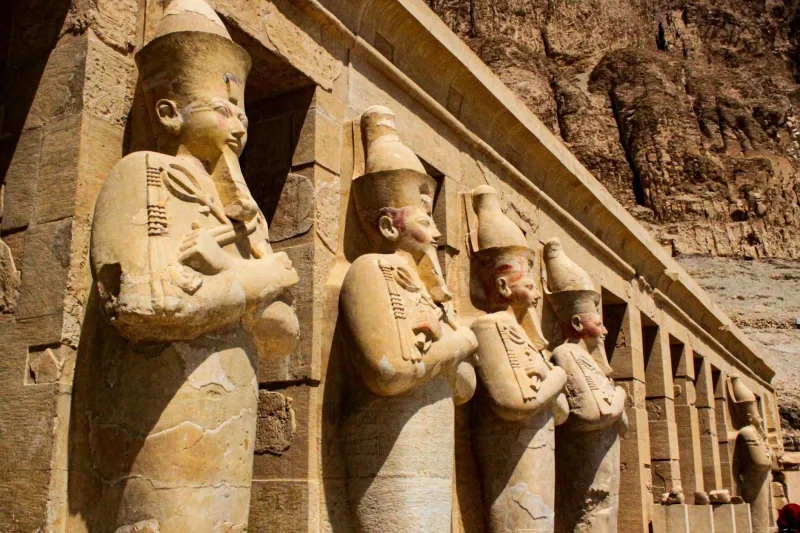
The craftsmen who built the pharaohs' tombs in Egypt's Valley of the Kings signed the world's first nondisclosure agreements. Not with papyrus and ink, but with their understanding that revealing the location of royal burial chambers meant execution for themselves and their families. No legal department needed. No arbitration clauses. Just the clear knowledge that some information was worth killing to protect.
These workers lived in a purpose-built village called Deir el-Medina, isolated from the rest of Egyptian society. They were well-paid, well-fed, and completely cut off from anyone who might be curious about their work. The physical separation reinforced the psychological contract: you can have a good life, but only if you never talk about what you do.
 Photo: Deir el-Medina, via www.quadrigatus.com
Five thousand years later, the formula remains unchanged. Modern tech companies build campuses with free food, laundry services, and sleeping pods — golden cages that make leaving the company ecosystem feel like exile. The perks aren't just benefits; they're isolation devices that make the outside world seem foreign and hostile.
The Mathematics of Compliance
Ancient rulers understood something that modern HR departments rediscovered: people don't stay quiet because of threats alone. They stay quiet because breaking silence costs more than keeping it. The Egyptian tomb workers weren't just afraid of execution; they were afraid of losing the best jobs in their society.
Roman emperors perfected this calculation. Palace servants knew state secrets that could topple governments, but they also knew that revealing those secrets would destroy their access to power, wealth, and status. The emperor's dinner parties weren't just social events; they were demonstrations of what silence could buy you.
This cost-benefit analysis explains why modern NDAs work even when they're legally questionable. The tech worker who signs twelve confidentiality agreements before starting at a major company isn't just agreeing to legal terms; they're accepting that their career depends on never making their employer look bad. The NDA is just paperwork. The real enforcement happens through industry blacklists, professional reputation destruction, and the knowledge that breaking silence means exile from the only community where their skills matter.
The Conspiracy of Normalcy
The most effective silence isn't bought with threats; it's manufactured through social pressure. Ancient Chinese courts developed elaborate hierarchies where each level of bureaucrat knew slightly different pieces of sensitive information. No single person below the emperor knew enough to cause real damage, but everyone knew enough to feel complicit.
This fragmenting of dangerous knowledge created a web of mutual dependence. Court officials couldn't expose corruption without implicating themselves. They couldn't rebel without losing their position in a system that defined their entire identity.
Modern organizations use the same technique. The startup employee who knows about the fake user metrics also knows about the questionable hiring practices and the dodgy financial projections. They can't expose one scandal without revealing their knowledge of others. Each secret becomes a chain linking them to the organization's fate.
When Everyone Knows Nothing
The strangest thing about organizational silence is how it persists even when the secrets aren't that secret. Medieval guilds maintained elaborate rituals around craft knowledge that was actually pretty common. The secrecy itself became more important than what was being kept secret.
Roman senators developed complex protocols around state information that most educated citizens already knew. The performance of secrecy reinforced the hierarchy more than the actual information did. Knowing the secret wasn't enough; you had to be authorized to know it.
This explains the modern phenomenon of open secrets in corporate America. Everyone knows the company is cooking the books, or that the CEO is having an affair with the head of marketing, or that the product doesn't actually work as advertised. But nobody talks about it because talking would require acknowledging that they're part of a system that tolerates these problems.
The silence isn't protecting the information; it's protecting everyone's ability to pretend they don't know.
The Exile Option
Throughout history, the ultimate enforcement mechanism for organizational silence has been banishment. Ancient Greek city-states used ostracism to remove citizens who knew too much or talked too freely. Roman emperors sent inconvenient senators to govern distant provinces. Chinese emperors transferred problematic officials to posts thousands of miles from the capital.
The message was always the same: you can keep your life and even your status, but not here, not where your knowledge matters.
Modern exile is subtler but equally effective. The whistleblower gets blacklisted from their industry. The former employee who writes a tell-all book finds themselves shut out of professional networks. The journalist who investigates corporate wrongdoing gets frozen out of access to sources.
We don't send people to Siberia anymore. We just make sure they can never work in this town again.
The Silence Industrial Complex
What's remarkable about organizational silence is how little it's actually changed across five millennia. The tools evolved from execution to exile to employment law, but the underlying psychology remained constant. People stay quiet because speaking up costs more than staying silent, because their identity is tied to the organization, and because everyone around them is making the same calculation.
The Egyptian tomb worker and the modern tech employee face identical choices: comfort and security in exchange for complicity, or truth-telling in exchange for exile. Most people choose comfort. They always have.
The lesson isn't that modern NDAs are as brutal as ancient death threats. It's that the human psychology that makes organizational silence work hasn't changed at all. We're still the same species that could be bought, isolated, and controlled by clever rulers five thousand years ago. We just pretend the chains are made of different materials now.