Honesty on the Way Out Has Always Cost Something

Photo: White House (Pete Souza) / Maison Blanche (Pete Souza), Public domain, via Wikimedia Commons
There's a ritual that plays out in offices across America roughly two million times a year. Someone is leaving — voluntarily or otherwise — and a person from HR sits down across from them with a form and a practiced expression of sincere curiosity. What could we have done better? What would you change? The departing employee smiles, says something vague about growth opportunities, and walks out. The form goes into a folder. The folder goes somewhere folders go.
This is not a modern failure of corporate culture. It is a very old, very stable feature of how power actually works.
The Scribe Who Knew Better
Around 1200 BC, Egyptian administrative scribes occupied a genuinely dangerous professional position. They were literate in a world where literacy was rare, which made them indispensable. They also recorded harvest yields, tax collections, and grain reserves — numbers that had a persistent tendency to disappoint pharaohs who had already announced to the gods that everything was going well.
What survives in the archaeological record is instructive. Scribes developed elaborate conventions for softening bad news in official documents — passive constructions, euphemisms, comparisons to worse years rather than better ones. The scribes who lasted long careers were not the most accurate. They were the most artful at delivering accuracy in a form that felt like good news.
When a scribe left royal service, whether through retirement, reassignment, or the kind of abrupt career ending that ancient Egypt specialized in, there was no formal debriefing. The institutional knowledge walked out with them. The next scribe learned the same lessons from scratch, usually the hard way. Nothing was captured. Nothing changed.
This is the first documented version of the exit interview problem: the people with the most accurate picture of organizational reality have always had strong structural reasons to keep it to themselves.
Rome's Freedmen and the Art of Diplomatic Exit
Roman society produced a fascinating class of people who understood this dynamic with unusual sophistication: freedmen, formerly enslaved individuals who had been manumitted and often remained in close professional proximity to their former masters' households and businesses.
Freedmen who had managed accounts, overseen estates, or run commercial operations for wealthy Romans accumulated years of operational knowledge — and years of watching what happened to people who delivered uncomfortable truths to powerful men. The Roman literary record is full of accounts of freedmen who navigated their exits with extraordinary care, offering praise, expressing gratitude, and saying absolutely nothing that could be construed as criticism of the household they were leaving.
Cicero's letters, Pliny's observations, Seneca's essays — all of them, in various ways, acknowledge the same reality. The person departing a powerful patron's orbit had to calculate not just what they said, but what the patron might remember them saying, years later, if circumstances changed. Honesty wasn't just immediately dangerous. It had a long tail.
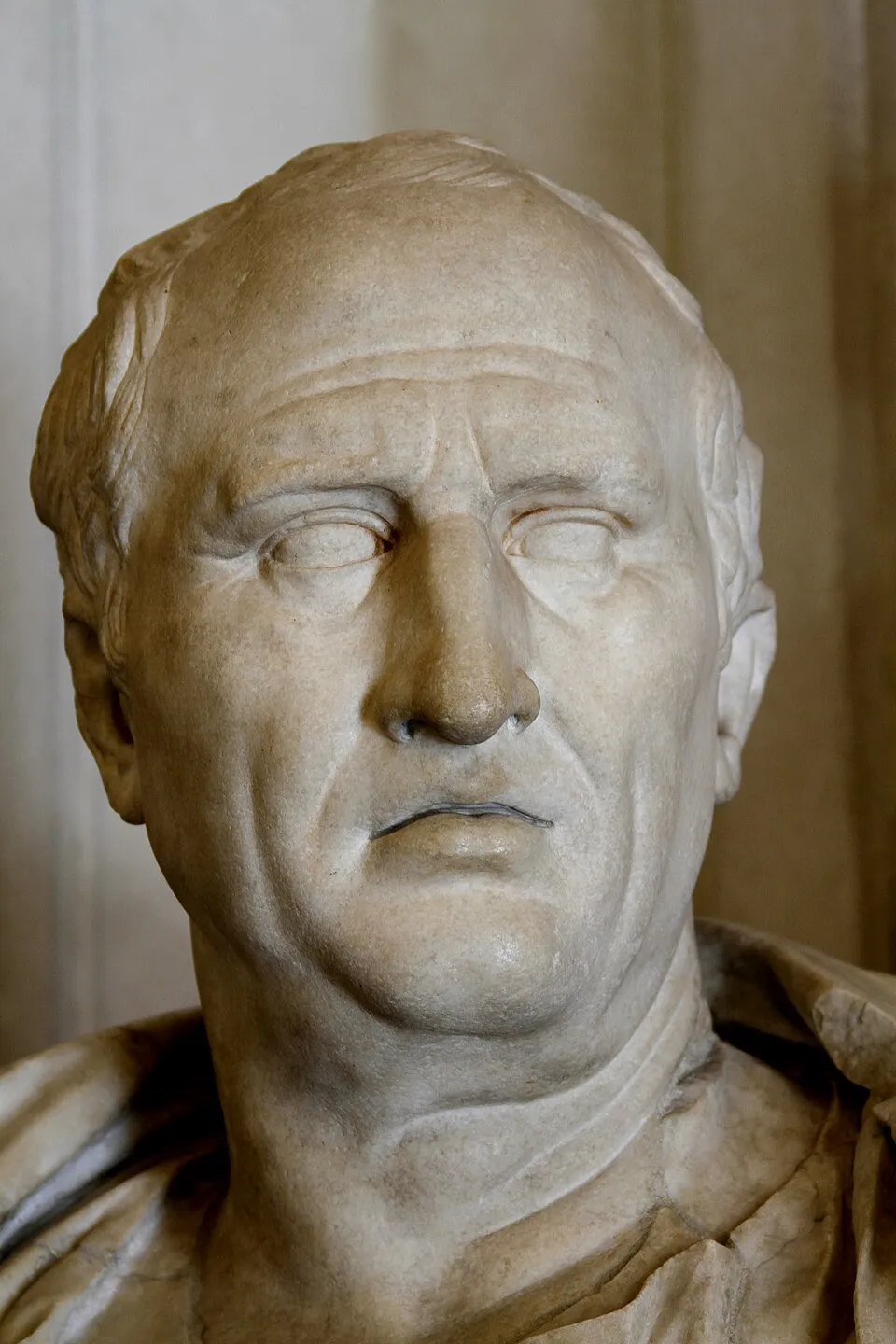 Photo: Cicero, via upload.wikimedia.org
The institution — the household, the business, the political operation — never got accurate feedback. It got a performance. And it kept making the same mistakes.
The Structured Farewell as Information Extraction
Here's the thing about exit interviews that the HR profession doesn't love to advertise: they were not designed primarily for the benefit of the person leaving. They were designed to extract information from someone who, in theory, no longer had anything to lose.
The logic is seductive. Once someone is already out the door, the usual incentives for self-censorship disappear. They can't be passed over for promotion. They can't be quietly reassigned to the bad accounts. So they'll tell you the truth, right?
Wrong. And humans have understood why this logic fails for a very long time.
Medieval guild systems in Europe created their own version of this problem when craftsmen left one master's workshop to join another. The departing apprentice or journeyman was often asked — formally or informally — to account for why they were leaving, what they had learned, what the previous workshop did well or poorly. The guilds genuinely wanted this information for competitive and quality-control reasons.
What they got was almost universally useless. The departing craftsman knew that the guild world was small, that masters talked to each other, that a reputation for disloyalty or sharp-tongued criticism would follow him to his next position and the one after that. He also knew that his former master might one day sit on a committee that decided whether he could open his own shop.
The exit interview had a future-reference problem. It still does.
Why the Information Never Goes Anywhere
Even when people do tell the truth on the way out — and sometimes they do, especially when they're angry enough not to care — a second and equally ancient failure kicks in.
Organizations don't actually want to use what they learn.
This sounds cynical, but it's more structural than that. The people conducting exit interviews are almost never the people with the authority to change what the departing employee is describing. The feedback goes up a chain. At each link of that chain, someone has an interest in softening it, contextualizing it, or quietly burying it before it reaches someone who might ask uncomfortable questions about who was responsible.
The Roman Senate collected enormous amounts of provincial intelligence through returning governors and military officers. Historians have noted, repeatedly, that this intelligence was systematically filtered before it reached decision-makers, and that the decision-makers often preferred the filtered version. The gap between what Rome knew and what Rome acted on was not primarily an information problem. It was a political problem dressed up as an information problem.
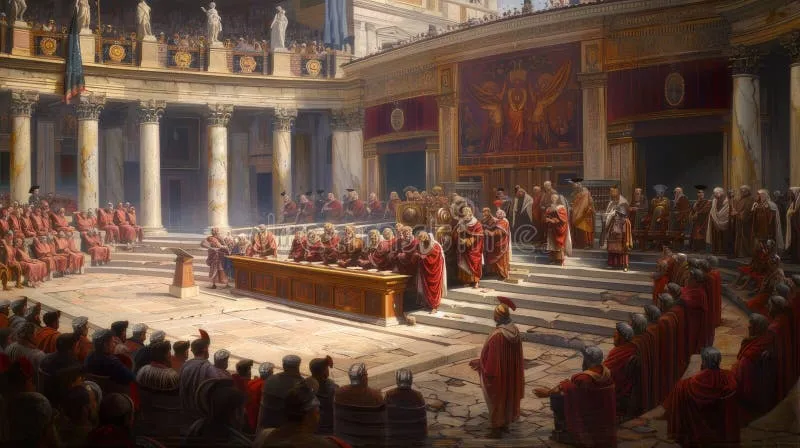 Photo: Roman Senate, via thumbs.dreamstime.com
Your company's exit interview data sitting unread in an HR database is the same problem, two thousand years later.
The People Who Actually Got Honest Feedback
There are historical exceptions, and they're revealing. Leaders who genuinely extracted useful information from departing subordinates tended to share a few characteristics: they had already demonstrated they wouldn't punish the messenger, they asked specific operational questions rather than vague evaluative ones, and they made the feedback conversation private rather than formal.
Augustus Caesar, whatever his other qualities, was known for seeking out returning soldiers and officers for informal conversations about conditions in the field — conversations that happened over dinner, not in administrative settings. He reportedly got better intelligence this way than through official channels, because the unofficial setting signaled that the rules were different.
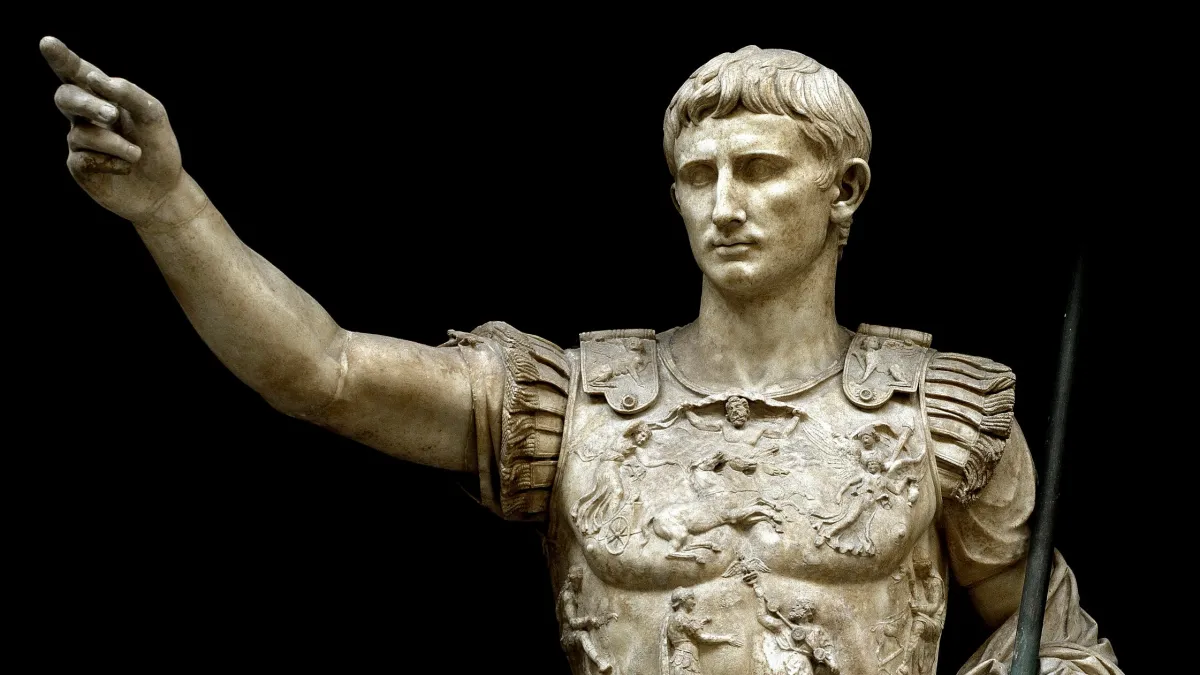 Photo: Augustus Caesar, via assets.editorial.aetnd.com
The pattern holds across cultures. Informal, low-stakes, private, specific. The opposite of everything the modern exit interview is.
What Five Thousand Years Is Telling You
If you're an employee sitting across from an HR representative right now, your nervous system already knows what four thousand years of institutional history confirms: say something nice, keep it vague, and protect your references.
If you're the institution — the company, the organization, the operation — the record is equally clear. The structured farewell conversation has never reliably produced actionable honesty. The people who know the most have the most to lose by sharing it, and the systems designed to receive their feedback have never been particularly interested in what it actually said.
Human psychology hasn't changed. The exit interview keeps getting scheduled. The folder keeps going wherever folders go.