What Survived the Library Wasn't an Accident
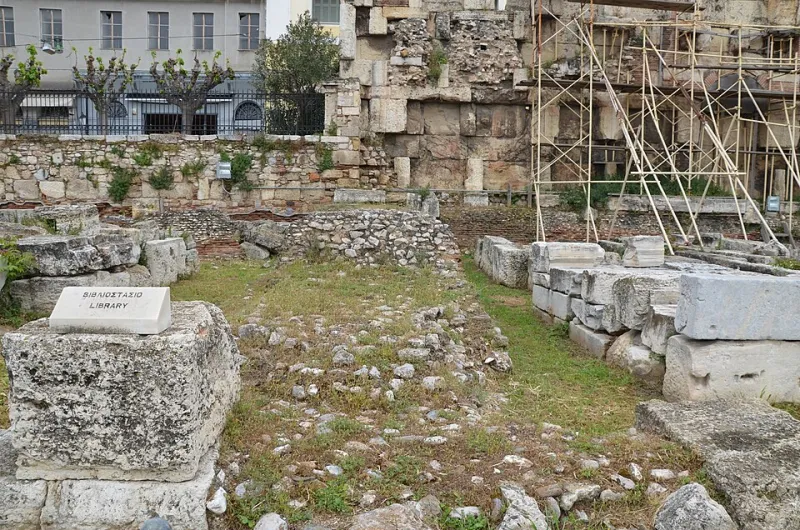
Photo: Carole Raddato from FRANKFURT, Germany, CC BY-SA 2.0, via Wikimedia Commons
What Survived the Library Wasn't an Accident
Here's a question worth sitting with: how do you know what ancient people actually thought, believed, or wrote? The honest answer is that you mostly don't. You know what survived. And what survived wasn't chosen by posterity or preserved by some neutral force of history. It was curated — actively, deliberately, and in service of whoever held the budget.
The algorithm has always been rigged. The interface just used to be a scroll.
The Library of Alexandria Was a Political Project
The Library of Alexandria gets treated in popular imagination as a tragic accident — the great repository of human knowledge, burned away by ignorance or war, leaving humanity intellectually orphaned. That story is mostly wrong, and the true version is more interesting.
The Ptolemaic rulers of Egypt who built Alexandria's famous Mouseion weren't preserving knowledge out of some abstract love of learning. They were building a legitimacy machine. By collecting the texts of every culture their empire touched — Greek philosophy, Egyptian religious writing, Persian astronomical records — they were demonstrating that all roads of intellectual authority ran through Alexandria. Through them.
The scholars they funded weren't neutral archivists. They were employees of the state, and the state had preferences. Texts that affirmed Greek cultural dominance got copied. Texts that challenged it or had no political utility got deprioritized. The great Alexandrian editors — Zenodotus, Aristophanes of Byzantium, Aristarchus — didn't just organize Homer. They decided which version of Homer was correct, which variants were authentic, and which competing texts deserved shelf space. That's not curation. That's editorial control with a fancy Greek name.
We have seven surviving plays by Aeschylus. He wrote around ninety. The math on that gap is not random.
Medieval Monks Weren't Saving Everything Either
When the Roman Empire's western half fragmented in the fifth century, the institutional knowledge of classical antiquity largely moved into monasteries. Christian monks became the primary copyists of European civilization for about a thousand years, which sounds like a lucky break for learning — until you think about it for more than thirty seconds.
Monks copied what their superiors approved. Texts with explicit pagan religious content got passed over, modified, or destroyed outright. Erotic poetry, materialist philosophy, scientific writing that contradicted church cosmology — all of it faced an implicit veto from the people controlling the vellum supply. Vellum, made from animal skin, was expensive. A monastery had limited resources. Choices had to be made. And the people making those choices had a very particular worldview.
Lucretius's De Rerum Natura — an Epicurean poem arguing that the universe is made of atoms, gods don't interfere in human affairs, and death is simply nothing — survived in a single medieval manuscript that a Florentine book hunter named Poggio Bracciolini found gathering dust in a German monastery in 1417. One copy. Fifteen centuries of near-extinction. The monks who had custody of it weren't enthusiastically circulating it.
 Photo: Poggio Bracciolini, via i.pinimg.com
Sappho wrote nine books of poetry. We have fragments. The reason isn't fire. It's that nobody in the medieval copying chain thought her work was worth the skin of an animal.
The Gatekeepers Were Always Making Arguments
This is the part that should change how you read history: the texts that survived aren't a representative sample of what was written. They're a biased dataset, shaped by the preferences of whoever controlled reproduction technology at the time.
Ancient Chinese imperial book-burning campaigns — most famously under Qin Shi Huang in 213 BCE — were explicit about this logic. Texts that supported Confucian political philosophy posed a challenge to centralized imperial authority, so they got destroyed. The emperor wasn't anti-intellectual. He was a very good information strategist. He understood that controlling which ideas could circulate was equivalent to controlling which ideas existed.
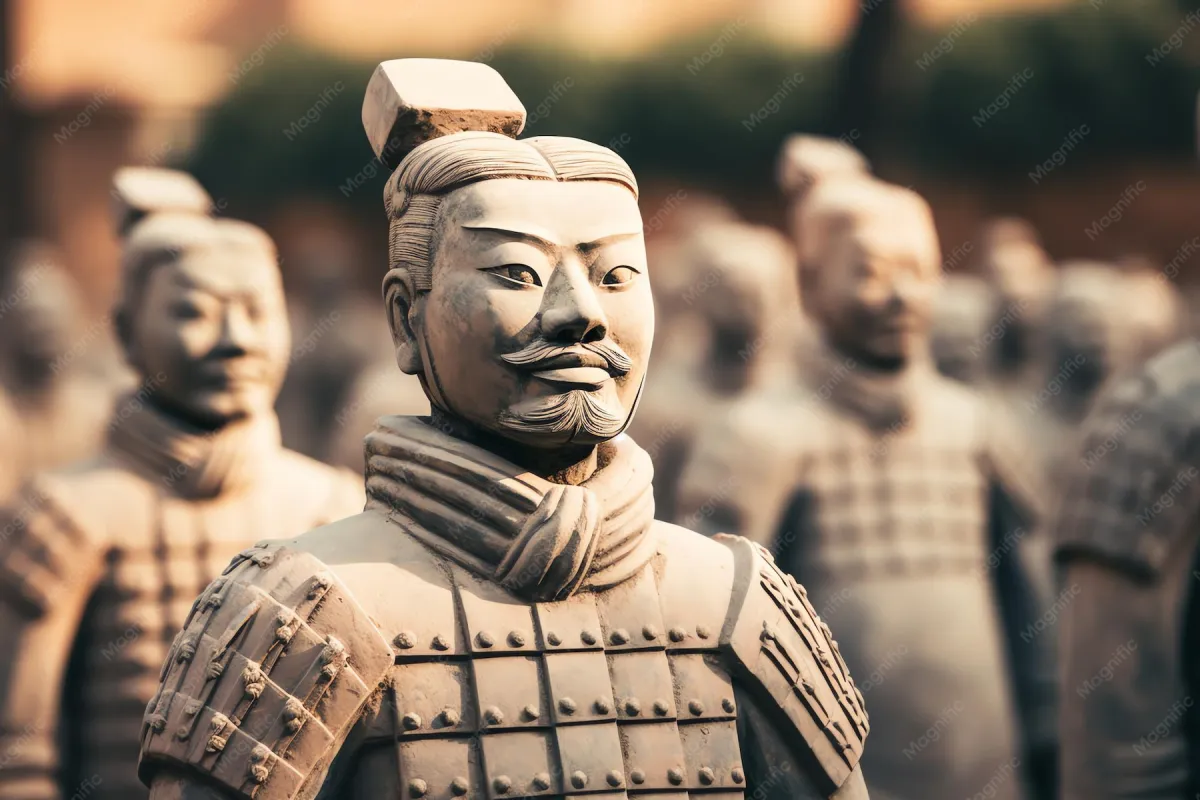 Photo: Qin Shi Huang, via img.freepik.com
The Roman Imperial court had its own version. Emperors who fell out of favor were subject to damnatio memoriae — condemnation of memory — which meant their names were chiseled off monuments and their official records destroyed. History got edited in real time, by the winners, using the tools available.
None of this required a conspiracy. It didn't need a secret cabal deciding what truth was allowed to survive. It just required people with resources making individually rational decisions about what was worth preserving, and those decisions accumulating over centuries into a systematic distortion.
That's how bias works. It doesn't need to be coordinated to be total.
The Modern Version Is the Same Argument in a Different Font
When people fight about content moderation, search ranking, or which stories trend on social platforms, they're usually framing it as a new problem created by new technology. It isn't. The technology is new. The power structure is ancient.
Google's search algorithm decides which pages exist for most practical purposes. Facebook's ranking system determines which ideas spread and which ones die in obscurity. YouTube's recommendation engine shapes what millions of people believe about medicine, politics, and history. The people who built those systems made choices — about what counted as quality, what counted as harmful, what deserved amplification — and those choices reflect their worldviews, their incentives, and their relationships with power, exactly the way a Ptolemaic librarian's choices reflected his.
The difference is scale and speed. The underlying human behavior — people with control over information reproduction making self-interested decisions about what survives — is identical.
What the Gaps Are Actually Telling You
If you want to understand ancient societies, the most useful thing you can do is pay attention to what's missing. The absence of women's voices from most ancient writing isn't because women didn't have thoughts. It's because the people who controlled copying infrastructure were almost universally men who didn't find women's perspectives worth preserving. The scarcity of working-class perspectives from antiquity isn't because workers didn't have opinions. It's because literacy and text production were elite activities, and elites were mostly interested in themselves.
The gaps are the data. They're telling you who had power, what they were afraid of, and what they needed future generations not to know.
Five thousand years of human knowledge production is, at its core, a five-thousand-year argument about who gets to decide what's real. The Alexandrian librarians had their answer. The medieval scriptoriums had theirs. Silicon Valley has its own, dressed up in the language of relevance and community standards.
The books that survived antiquity tell us more about ancient gatekeepers than about ancient reality. Keep that in mind the next time an algorithm tells you what's worth reading.