You've Been Lying on Your Resume Since the Bronze Age

You've Been Lying on Your Resume Since the Bronze Age
Let's be honest about what a resume actually is. It's not a factual account of your professional life. It's a curated argument that you deserve to be hired. Every word is chosen. Every gap is managed. Every job title gets a little extra dignity in the verb selection. You "spearheaded" a project that you technically attended the kickoff meeting for. You "collaborated cross-functionally" with someone you emailed twice.
This is not a modern moral failure. This is an ancient human technology working exactly as designed.
The Scribes Who Wrote Their Own Recommendations
In ancient Egypt, the people best positioned to manage their own professional records were the ones who could write. Scribes — the administrative backbone of pharaonic bureaucracy — were also the people responsible for maintaining temple service logs, land registries, and employment histories. The conflict of interest was structural and apparently nobody's problem.
Archaeological records from the New Kingdom period (roughly 1550–1070 BC) show scribes presenting their service histories with remarkable... generosity. Years of service appear rounded up. Supervisory roles get credited to people who were, at best, adjacent to the supervision. Titles accumulated like honorifics at a royal court. A scribe who spent two years copying grain tallies might present himself as a senior temple administrator by the time he was applying for a better posting.
Was this fraud? In the modern sense, sure. In the ancient Egyptian sense, it was closer to standard practice. The people evaluating these records were also scribes. They understood the genre. A resume was then, as now, a document you read with a calibrated skepticism — not a sworn deposition.
Roman Freedmen and the Art of the Strategic Biography
Rome presents an even more dramatic case. The Roman economy ran significantly on the labor of freed slaves — liberti — who could become merchants, craftsmen, physicians, teachers, and administrators after manumission. Many became genuinely wealthy and influential. Some became more powerful than the freeborn citizens who technically outranked them.
But there was a problem. Roman social hierarchy was obsessive about origins. Who your father was, whether you were freeborn, what family you came from — these things mattered enormously for professional and social advancement. A freedman's formal legal status was visible in his name (Roman naming conventions encoded it), but the details of his prior life were often known only to himself and his former master.
What happened, predictably, was that freed slaves rewrote their histories. A man who had been a household slave for a wealthy senator might present himself, in new social contexts, as someone who had "served in the household of" that senator — technically accurate, strategically reframed. Skills learned under compulsion became skills developed through diligent study. Connections made through servitude became connections made through professional relationships.
Roman writers complained about this constantly. Juvenal, Martial, and Petronius all have extended rants about freedmen who presented themselves as something other than what they were. The Satyricon's Trimalchio — a freed slave turned absurdly rich dinner host — is basically a comic portrait of a man whose entire identity is a resume embellishment walking around in a toga.
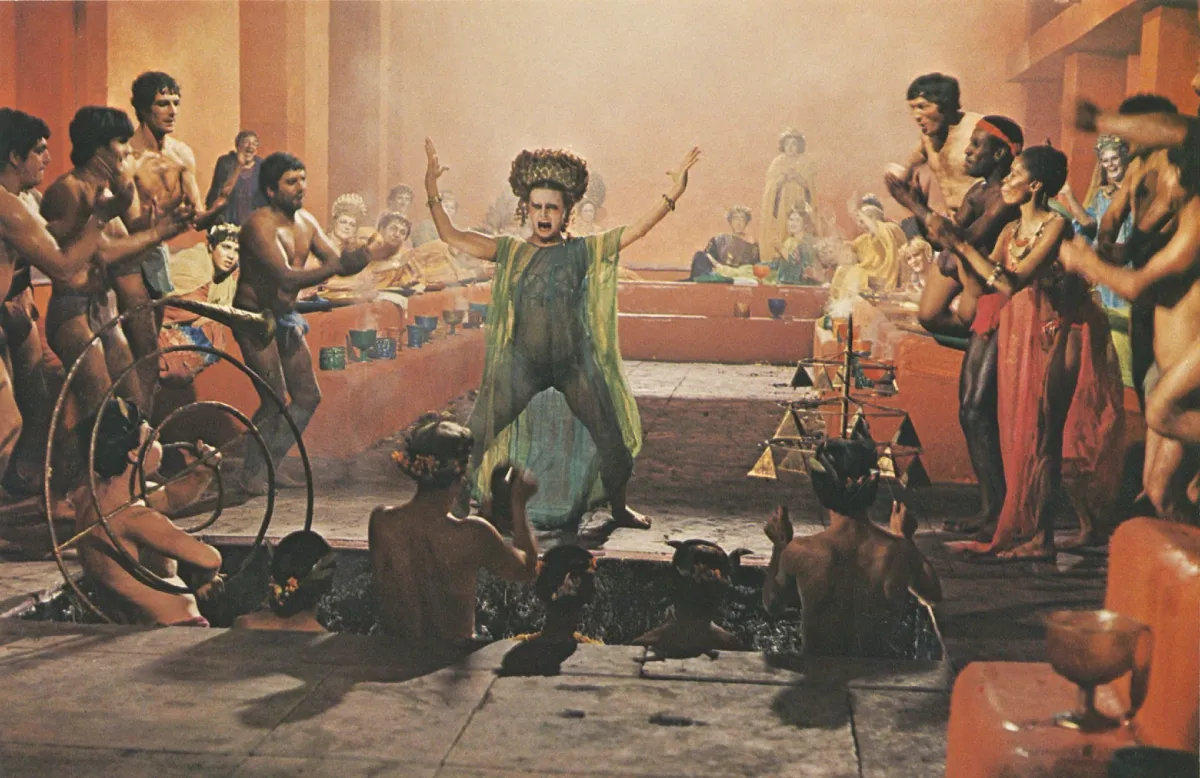 Photo: Trimalchio, via thesatyricon.uk
 Photo: Petronius, via pictures.abebooks.com
 Photo: Juvenal, via mir-s3-cdn-cf.behance.net
The complaints didn't stop the practice. They never do.
Medieval Guilds and the Credential Inflation Problem
The medieval guild system attempted to solve the resume problem with institutional verification. Want to call yourself a master craftsman? You had to complete an apprenticeship, produce a documented masterwork, and get accepted into the guild. Your credentials were, in theory, independently confirmed by people with professional standing and a financial interest in maintaining standards.
In practice, guild records from England, France, and the Italian city-states show that credential verification was porous in ways that will feel familiar. Letters of introduction from distant cities were difficult to check. Apprenticeship records got lost, or claimed to have been lost. The masterwork requirement could be waived for the right applicant with the right connections. Guild membership could be inherited or purchased in ways that had nothing to do with actual skill.
The system was better than nothing. It was also gamed constantly by people who understood that the point of a credential is not to demonstrate competence — it's to signal it convincingly enough to get hired.
The Psychology of Selective Truth
Here's what the historical record makes clear: resume embellishment isn't a symptom of declining honesty. It's a stable feature of human self-presentation under conditions of competitive evaluation.
The psychology isn't complicated. When you're being assessed for something you want, you emphasize information that helps your case and de-emphasize information that doesn't. You use framing to make ordinary things sound significant. You adopt the vocabulary of the field you're trying to enter, because vocabulary signals belonging. You describe your past in terms of its best possible interpretation, because that's the interpretation you'd like the evaluator to adopt.
This isn't lying in the way that saying "I have a PhD when I don't" is lying. It's the kind of selective truth-telling that humans engage in constantly in social contexts — on dates, in job interviews, when meeting your partner's parents for the first time. The resume just formalizes the process and gives it a document format.
Psychologists call this "impression management," and studies on it consistently find that people across cultures engage in it automatically and without much deliberate calculation. You don't sit down and think "I will now strategically misrepresent my experience." You sit down and think about how to present yourself well, and the rest follows naturally.
What the Evaluators Have Always Known
The other half of this story is the people doing the hiring. Egyptian temple administrators, Roman patrons evaluating freedmen for household positions, medieval guild masters reviewing apprenticeship claims, and modern HR departments all share one thing: they know the document in front of them is a sales pitch, not a census record.
Hiring has never been primarily about verifying the accuracy of a candidate's self-description. It's about reading between the lines, assessing presentation and judgment, and making a probabilistic bet on future performance based on incomplete information. The resume is the opening of a negotiation, not the closing of one.
This is why the resume hasn't fundamentally changed in four thousand years even though everything around it has. Not because humans are lazy about innovation, but because the document is doing exactly what it was always supposed to do. It's a controlled performance of professional identity, and everyone involved in the transaction understands that on some level.
The Egyptian scribe inflating his temple service record knew his evaluator would discount it somewhat. The Roman freedman reframing his servitude knew his patron would read between the lines. You know, when you write "managed a team" about a project where you technically supervised one intern for six weeks, that a good interviewer will ask follow-up questions.
The document isn't the truth. It's the beginning of a conversation about the truth. It always has been.
Five thousand years of job seekers understood that instinctively. The only thing that's actually changed is that now we have a word for it, and a LinkedIn profile that does the same thing with endorsements.