The 'Traditional Family' Is a 1950s Invention With a Fake Ancient Pedigree

The 'Traditional Family' Is a 1950s Invention With a Fake Ancient Pedigree
In American political discourse, the phrase 'traditional family' does a remarkable amount of work for a concept with almost no historical precision. It appears in campaign speeches, Supreme Court briefs, church bulletins, and cable news segments with the confidence of a term that everyone understands and that points to something real and ancient and stable.
It doesn't. Or rather: what it actually points to, if you follow the historical thread backward, is a roughly thirty-year window in mid-20th-century American life — the postwar suburban boom — that was itself a product of specific economic conditions that have never been replicated since. The 'traditional family' isn't a description of how humans have organized their households across history. It's a snapshot of 1955 that got retrofitted with five thousand years of imaginary precedent.
The actual historical record is messier, more varied, and considerably more interesting.
What the Roman Household Actually Looked Like
The Roman familia is one of the most frequently misunderstood institutions in ancient history, partly because the Latin word 'familia' sounds like 'family' and therefore seems to mean the same thing. It didn't.
The Roman familia was a legal and economic unit headed by the paterfamilias — the oldest living male — and it included not just his wife and children but his adult sons and their wives, his grandchildren, unmarried daughters, dependent relatives, freedmen who owed him obligation, and slaves. Depending on the family's wealth and circumstances, this could be anywhere from a dozen to hundreds of people living in or around the same household compound.
This wasn't an accident or a sign of underdevelopment. It was a deliberate economic strategy. Pooling labor, capital, legal standing, and social connections under one household structure made the unit more resilient than any individual nuclear arrangement could be. When a Roman politician wanted to describe the ideal household, he was describing a multigenerational economic enterprise, not a married couple with two kids in a domus with good curb appeal.
The nuclear arrangement — parents plus minor children, economically isolated from extended kin — was actually considered somewhat precarious in Roman thinking. A household without strong lateral connections was a household that couldn't absorb a bad harvest, a military levy, or a death.
Medieval Households Were Economic Partnerships First
If Rome's household structure complicates the 'traditional family' narrative, medieval European arrangements make it even harder to sustain. The idealized image of the medieval household as a pious, self-sufficient family unit is largely a Romantic-era invention — a projection backward from 19th-century nostalgia onto a period that operated very differently.
In medieval England, it was common practice for children as young as seven or eight to be sent to live in other households as servants, apprentices, or wards. This wasn't considered cruel or unusual — it was how skills were transmitted, alliances were built, and children were given opportunities their birth household couldn't provide. The emotional core of the family wasn't the household you were born into; it was the network of obligations, apprenticeships, and patronage relationships that defined your adult life.
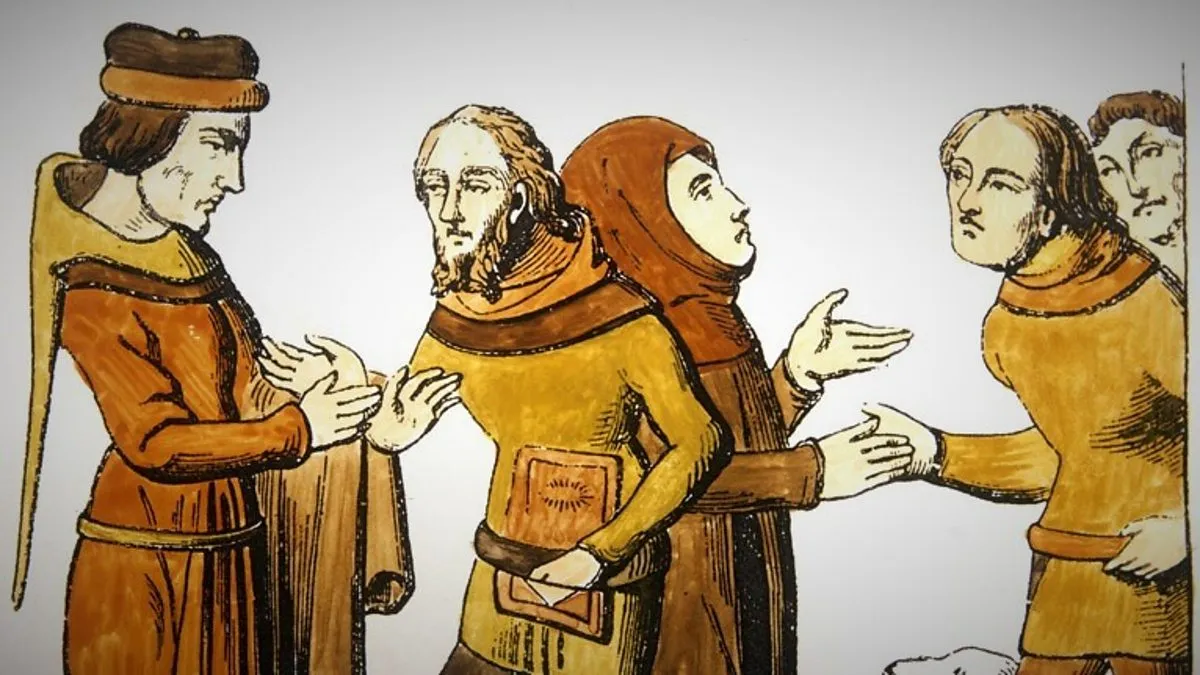 Photo: medieval England, via ichef.bbci.co.uk
Marriage itself was primarily an economic and political instrument. Among the nobility, this is well-documented — marriages were alliances between houses, negotiated by parents, sometimes contracted before the parties were old enough to consent in any meaningful sense. But among the peasantry and artisan classes, marriage was equally transactional. A widow with a functioning farm remarried quickly not for companionship but because a farm required two adults to operate. The emotional dimensions of the relationship were real, but they were not the organizing principle.
The idea that marriage should be primarily a romantic and emotional bond — and that the household it creates should be economically self-sufficient and separate from extended kin — is a relatively recent cultural development, not an ancient one.
The American Frontier Ran on Communal Living
American politicians invoking traditional values often have a particular image in mind: the self-reliant pioneer family, carving out independence on the frontier. This image exists. It's also profoundly misleading about how frontier households actually functioned.
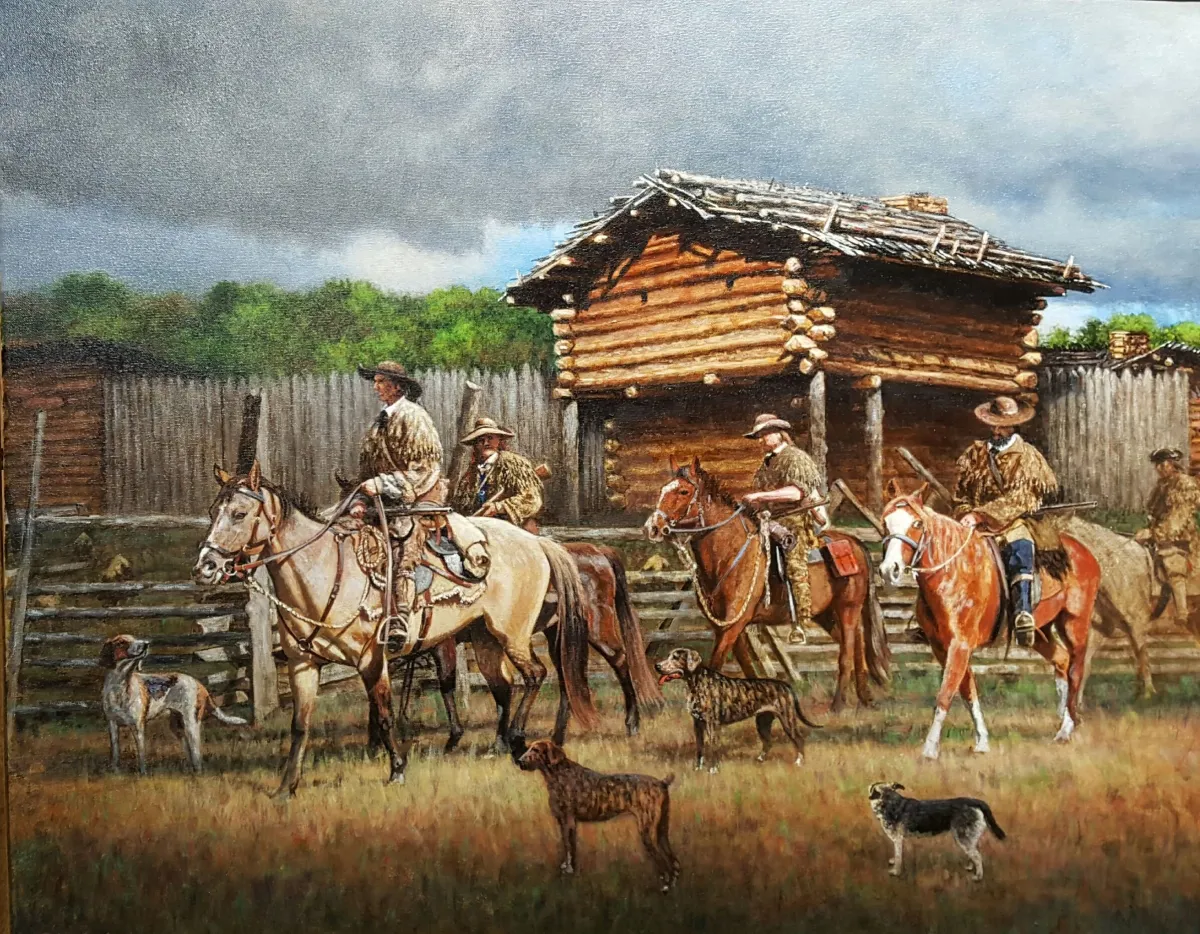 Photo: American frontier, via i.pinimg.com
Early American frontier settlements were intensely communal by necessity. Barn raisings — where the entire community turned out to build a neighbor's structure — are the famous example, but the communal interdependence went much deeper. Child-rearing was shared across households. Elderly parents lived with adult children because there was no alternative. Extended family networks shared land, labor, and resources in ways that would be recognizable to a Roman paterfamilias.
The 19th-century American frontier household was also frequently multigenerational in ways that the nuclear family ideal explicitly rejects. Grandparents, aunts, uncles, and cousins often lived under the same roof or on adjacent plots because isolation was economically fatal. You survived winter because your neighbors helped you survive winter. The rugged individualism of frontier mythology was always a political story layered over a social reality of deep mutual dependence.
Where the Nuclear Family Actually Came From
The household structure that gets called 'traditional' — married heterosexual couple, their biological children, economically independent from extended family, living in a single-family home — became statistically dominant in the United States for roughly one generation, from the late 1940s through the mid-1960s. It was produced by a very specific set of conditions: the postwar economic boom, the GI Bill's subsidized mortgages and education, the federal highway system that made suburban development possible, and a manufacturing economy that paid enough for a single earner to support a household.
All of those conditions were specific, contingent, and temporary. When they changed — as the manufacturing economy contracted, as women entered the workforce in force, as housing costs outpaced wages — the household structure changed with them. The nuclear family wasn't a timeless arrangement that economic pressures disrupted. It was an economic arrangement that specific postwar subsidies briefly made viable and that the end of those subsidies gradually unwound.
Why the Nostalgia Is Real Even If the History Isn't
None of this means the people invoking 'traditional family values' are arguing in bad faith or that the underlying concerns are illegitimate. The psychological research on family stability, community connection, and child outcomes is real and genuinely complex. The sense that something has been lost — that households are more fragile, communities more atomized, economic interdependence harder to come by — reflects real changes in American life.
But the historical record doesn't support the idea that those losses can be addressed by returning to an arrangement that was itself a brief historical anomaly. Humans organized their households around multigenerational economic cooperation for most of recorded history not because it was morally superior but because it was the only arrangement that worked under conditions of genuine scarcity and limited institutional support.
What we've actually lost, if the historical record is any guide, isn't the nuclear family. It's the economic conditions that made a stripped-down version of household independence briefly viable — and the community networks that made the stripped-down version survivable when it wasn't.
The 'traditional family' as a political concept asks us to preserve a snapshot. The actual human tradition, five thousand years of it, was always more flexible, more communal, and considerably less tidy than the snapshot suggests.