Stopping Work Was Once a Radical, Borderline Shameful Idea

Somewhere around your mid-forties, if you're a typical American, you start doing a specific kind of math. You open a retirement calculator. You enter your current savings, your projected contributions, your assumed rate of return, and your hoped-for retirement age. The calculator tells you whether you're on track for a life stage that will last, on average, somewhere between fifteen and twenty-five years — a period of voluntary non-work, funded by accumulated assets, during which you're expected to travel, pursue hobbies, spend time with grandchildren, and generally enjoy the fruits of your labor.
This seems normal to us. It is, historically speaking, one of the stranger ideas our civilization has produced.
What Work Actually Meant for Most of Human History
In ancient agricultural societies — which is to say, in the societies where most humans lived for most of recorded history — work wasn't a phase of life that you eventually graduated from. It was the condition of being alive and a member of a community.
Egyptian peasants worked the land from the time they were old enough to help until the time they physically couldn't. Mesopotamian craftsmen passed their trades to their children precisely because the trade was the family's survival mechanism — you didn't retire from it, you transferred it. Roman farmers, Greek merchants, medieval serfs: the pattern is consistent across cultures and centuries. You worked as long as you were able. You slowed down when your body forced you to. You depended on your family or community when you could no longer contribute. The idea that you would voluntarily stop working at a predetermined age because you had saved enough money to fund an extended leisure period would have been incomprehensible — and in most cases, economically impossible.
The concept of a "career" as a discrete thing you have, manage, and eventually conclude was itself a relatively recent invention. For most of human history, what you did to survive wasn't a career — it was just your life, indistinguishable from your identity, your family role, and your social function.
The Roman Case: Work as Moral Obligation
Rome offers an interesting window into how seriously pre-modern societies took the ethics of continuous work. Roman civic ideology — especially in the Republican period — treated negotium (business, work, public activity) as the proper condition of a citizen, and otium (leisure, rest, inactivity) as something that required justification.
Otium wasn't simply laziness. Cicero, Seneca, and others wrote about it as a legitimate space for intellectual cultivation — but only if you'd earned it through prior service, and only if you used it productively. Pure idleness, the absence of contribution to family or state, was morally suspect. A man who simply stopped working because he could afford to was not admired. He was watched.
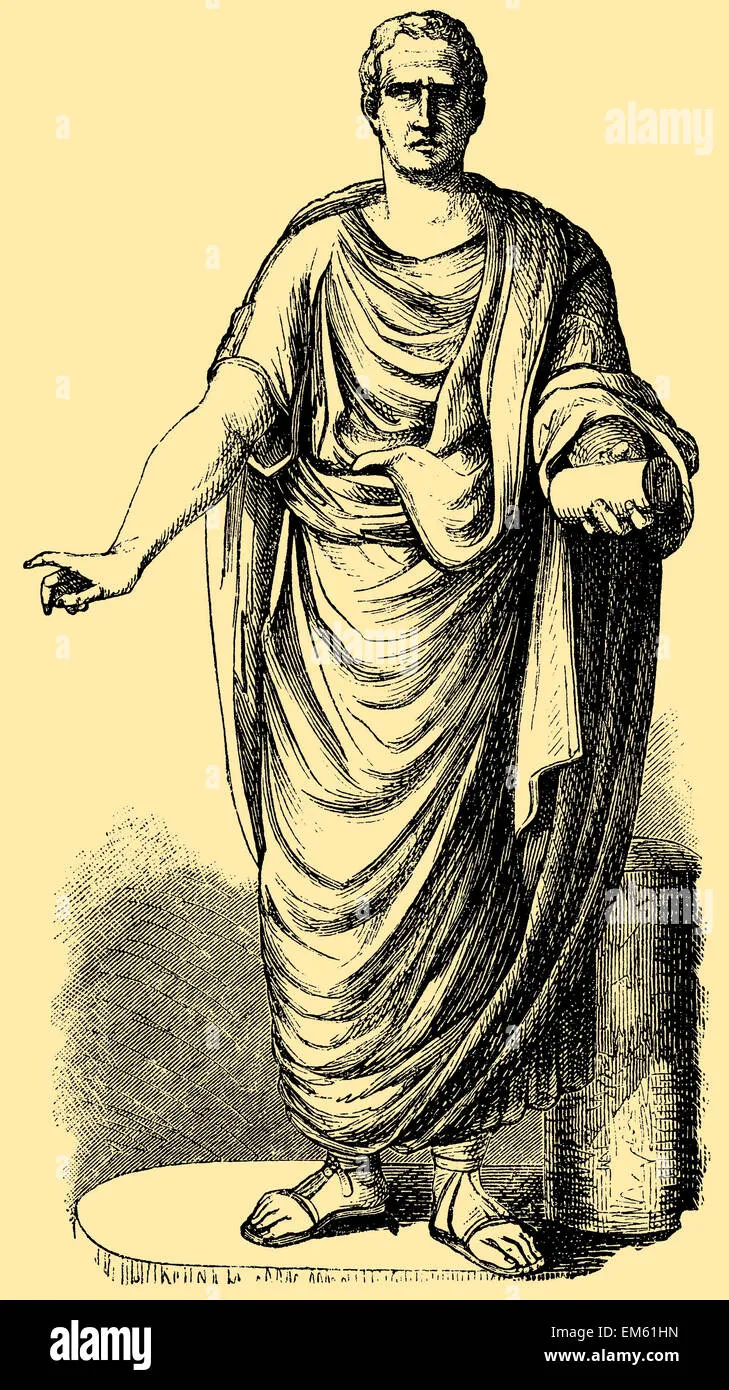 Photo: Cicero, via c8.alamy.com
This wasn't just elite ideology. Roman funerary inscriptions — the ancient equivalent of obituaries, and one of the most direct records we have of how ordinary Romans understood a life well-lived — emphasize work, craft, and service relentlessly. The epitaphs of freedmen and tradespeople celebrate their occupations with a pride that suggests identity and vocation were genuinely fused. Nobody wrote "he worked hard and then stopped at 65 and enjoyed his savings." They wrote what the person made, built, traded, or served.
The Invention of Retirement (It's Younger Than Your Grandparents)
The modern retirement system, in the American sense, is extraordinarily recent. Social Security was established in 1935, and the age-65 retirement threshold it institutionalized was partly chosen because average life expectancy at the time meant relatively few people would collect benefits for very long. The program was designed as insurance against outliving your ability to work — not as a funded vacation of indeterminate length.
The 401(k) — the primary vehicle through which most Americans now fund their retirements — was created in 1978 and became widespread only in the 1980s. The vision of retirement as a lengthy, self-directed life stage funded by personal savings is, in its current form, roughly forty years old. The generation that invented it is still alive. Their parents mostly didn't have it.
Before Social Security and pension systems, the question of what happened to old people who couldn't work was answered the same way it had been answered for millennia: family obligation and community support. You lived with your children. The farm or the business passed to the next generation and they took care of you. If you had no family, you depended on charity, the church, or the poorhouse. The idea that you would independently accumulate enough capital during your working years to fund your own non-working years — without relying on family or state — would have required a level of individual financial infrastructure that simply didn't exist.
Why We're So Anxious About It
Here's the historically interesting part: Americans are famously terrible at retirement savings, and famously anxious about it. Survey after survey finds that a majority of Americans feel they're behind on retirement savings. A significant percentage have essentially nothing saved. The anxiety is widespread, persistent, and seems immune to financial education campaigns.
The standard explanation for this is behavioral — people discount the future too heavily, they lack financial literacy, they're distracted by immediate needs. All of that is probably true. But there's another explanation that the historical record suggests: we are asking humans to do something that has no precedent in the architecture of human psychology.
For virtually all of human history, "saving for retirement" was not a thing an individual did. It was a thing a family did, a community did, a social structure did. The resources you'd need in old age were embedded in relationships — children who would support you, a trade you could pass on, land that would continue producing, a guild that had obligations to its elderly members. The idea that you, individually, should accumulate a large enough pile of financial assets to fund fifteen to twenty-five years of non-work, entirely through your own foresight and discipline, starting in your twenties when you have the least money and the longest time horizon — this is an enormously demanding ask of a psychology that evolved in a world where none of those mechanisms existed.
The Identity Problem Nobody Talks About
There's a second historically anomalous feature of retirement that gets less attention than the financial anxiety: the identity collapse.
Studies on retirement consistently find elevated rates of depression, cognitive decline, and loss of purpose in the years immediately following retirement — particularly among people whose identity was strongly tied to their work. This surprises people. It shouldn't. For most of human history, what you did was who you were. The Roman craftsman's epitaph celebrated his trade because his trade was his self-description. The medieval guild member's entire social world was organized around his occupation. Removing the occupation didn't leave a person with a life to fill with leisure. It left a person without a coherent social identity.
Modern retirement asks people to voluntarily step into exactly that void and thrive there. Some people manage it beautifully. Many don't. The ones who do tend to be the ones who've built a robust non-work identity — volunteer roles, community involvement, creative pursuits — before they stop working. In other words, the people who handle retirement best are the ones who've essentially created a second vocation to step into. Which is, historically speaking, just... still working.
The Longest Human Experiment
We've been running the modern retirement experiment for about forty years at scale. The results are mixed in ways that five thousand years of prior human experience might have predicted. The financial model is under stress. The psychological model has known failure modes. And the social support structures that made old age survivable for most of human history — family obligation, community networks, integrated multi-generational living — have been substantially dismantled in favor of individual savings accounts.
None of this means retirement is a bad idea. It means it's a genuinely new idea, built on assumptions about individual financial capacity and personal identity that have no deep historical roots. The anxiety Americans feel about it isn't irrational. It's the entirely reasonable response of a psychology that was never designed for this particular challenge, confronting a life stage that didn't exist until the day before yesterday.
Your grandparents' grandparents didn't retire. They worked until they couldn't, and then they leaned on their people. We replaced that system with a spreadsheet and told everyone to figure it out.
The spreadsheet is doing fine. The humans are still adjusting.