The Leisure Years Were Always a Temporary Deal
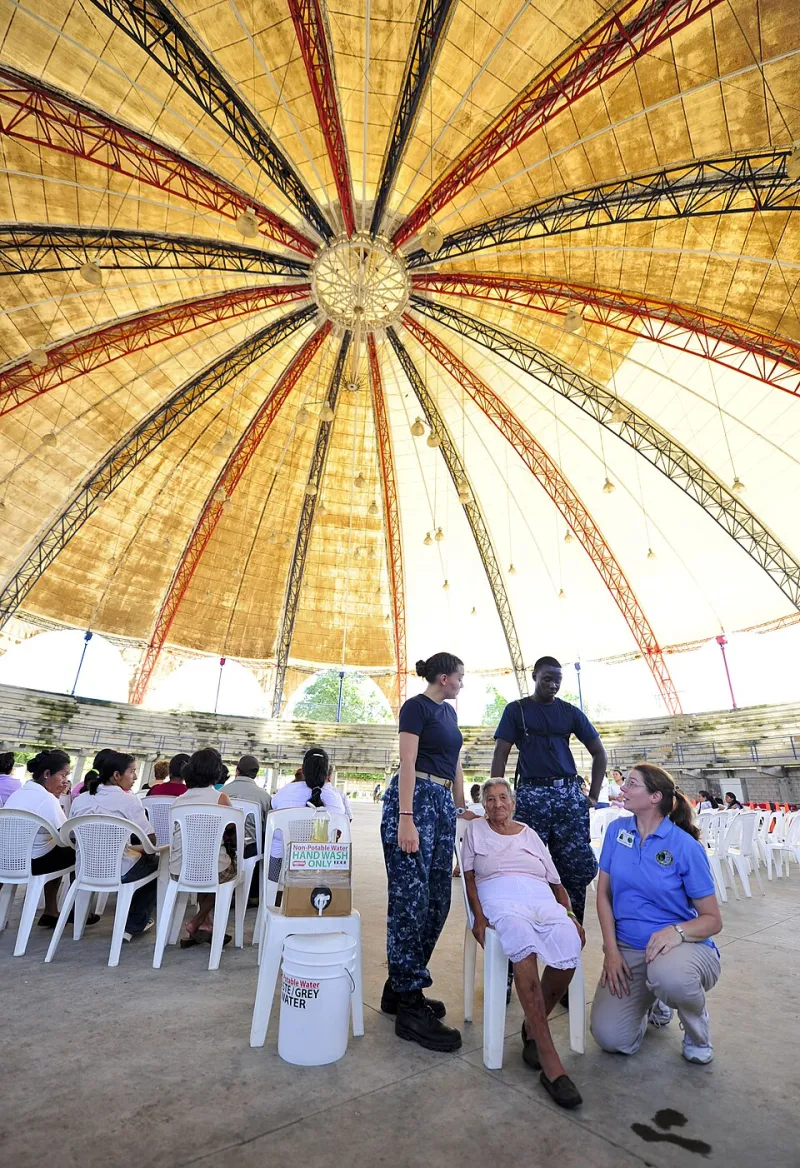
Photo: U.S. Navy photo by Mass Communication Specialist 2nd Class Jonathen E. Davis, Public domain, via Wikimedia Commons
Somewhere in the American imagination lives a very specific picture of retirement: a couple in their mid-sixties, healthy enough to travel, financially comfortable enough not to panic, with a decade or two of earned leisure stretching ahead of them. Maybe a condo in Florida. Maybe a lake house. The work is done; the reward has arrived.
That picture is about 75 years old. For the several thousand years before it, the picture looked completely different — and we're quietly sliding back toward the older version whether we've decided to or not.
What "Retirement" Looked Like for Most of Human History
For the overwhelming majority of the human timeline, there was no such thing as retirement in the modern sense. There was incapacity. When you could no longer work — through injury, illness, or the accumulated damage of physical labor — you stopped working. What came next depended entirely on your social position and the people around you.
In agricultural societies, which describes most of human civilization until recently, elderly family members transitioned from primary labor to secondary roles: watching children, managing smaller tasks, passing on knowledge. They didn't stop being economically useful; they shifted their contribution. The family unit absorbed the cost of declining productivity because the family unit had always been the social safety net. There was no other option.
Ancient Rome had something that looked vaguely like institutional retirement for a narrow slice of the population: military veterans. After 20-plus years of service, Roman legionaries received a discharge payment — either land or a cash praemia — and some veterans received ongoing support through veterans' colonies. But this wasn't a universal promise of funded leisure. It was a specific reward for specific service to Roman military power, available only to men who'd survived decades of combat, and it was explicitly designed to keep soldiers loyal during their service rather than to provide comfortable old age as a human right.
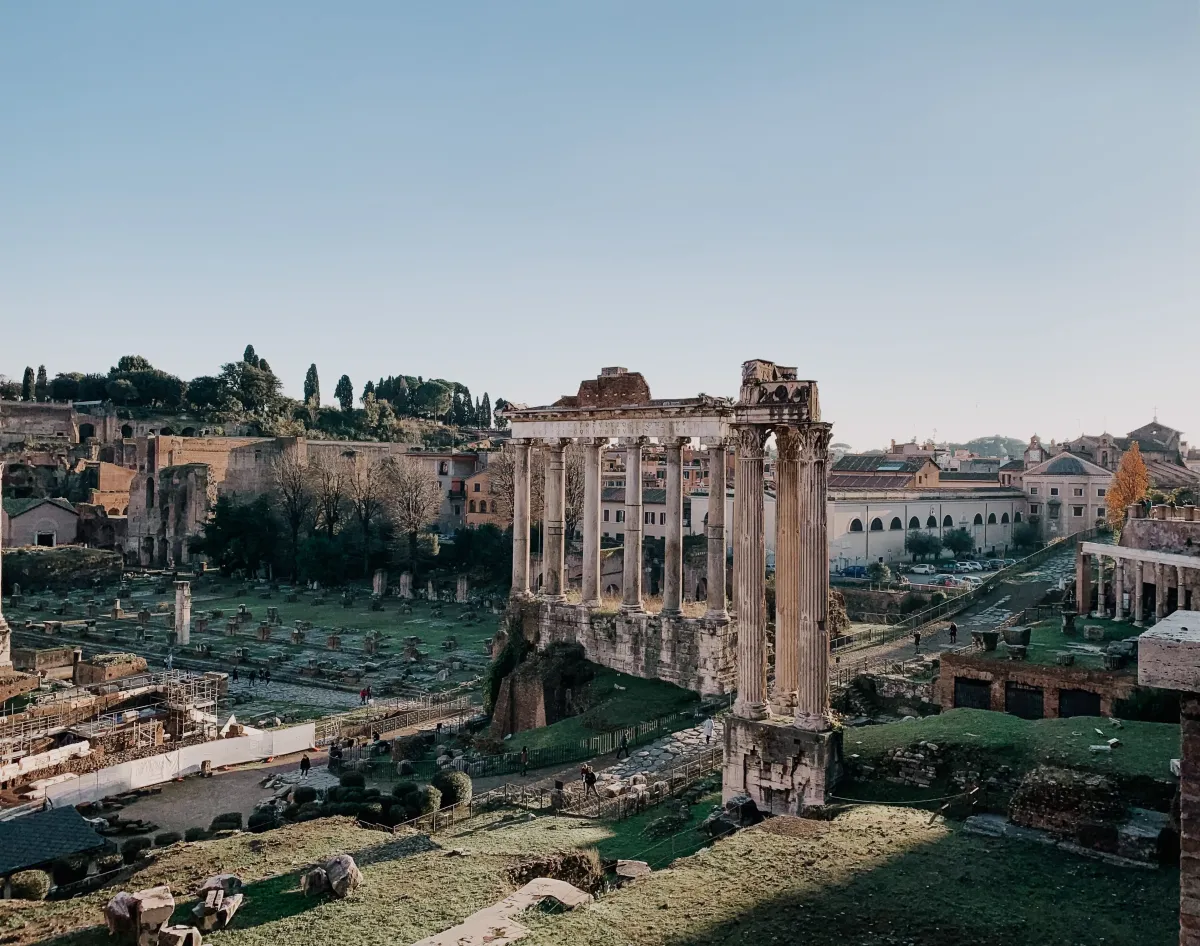 Photo: Ancient Rome, via images.pexels.com
Roman emperors occasionally granted pensions to favored courtiers, philosophers, or administrators. These were patronage payments — rewards for usefulness to power, revocable at will, not remotely universal. If you were an ordinary Roman craftsman, farmer, or merchant, there was no retirement. You worked until your body stopped, and then your family managed the situation, or you didn't manage at all.
The same pattern holds across ancient China, medieval Europe, pre-colonial societies everywhere. The concept of a funded, universal leisure period at the end of working life simply did not exist as a social institution. It couldn't. The economic machinery to fund it didn't exist, and nobody had thought to build it.
How the Modern Version Got Invented
The modern retirement system is a mid-20th century construction built on a very specific set of demographic and economic conditions that made it briefly, historically unusually, possible.
Social Security was signed into law in 1935, setting the retirement age at 65 — which was, at the time, roughly the American male life expectancy. The program was designed to support a relatively small population of genuinely elderly people who had outlived their working capacity, funded by a large working-age population paying into the system. The math worked because the ratio worked: lots of workers, few retirees, short benefit periods.
The postwar economic boom supercharged the concept. Company pensions became standard in unionized industries. The GI Bill built a middle class with savings capacity. Rising wages meant workers could actually accumulate something. For roughly two decades — call it 1950 to 1970 — the conditions aligned to make the Florida-condo retirement picture genuinely achievable for a significant portion of the American working class. This was historically extraordinary. It felt like a permanent feature of modern life because it had never been seen before and there was no framework for recognizing how contingent it was.
Then the contingencies started shifting.
The Demographics That Made It Work Stopped Working
Life expectancy kept rising. The retirement age mostly didn't. The gap between when people stopped working and when they died went from a few years to potentially two or three decades. The program designed to cover a short incapacity period at life's end became responsible for funding what amounts to a second adult life.
The worker-to-retiree ratio inverted. The Baby Boom that had loaded the workforce with contributors produced a massive retiree cohort that now needs to be funded by a smaller generation of workers. The 16-to-1 worker-to-retiree ratio of Social Security's early years is now around 2.7-to-1 and falling.
Company pensions got replaced with 401(k)s, which shifted investment risk from employers to employees and produced wildly uneven outcomes depending on when you happened to retire relative to market cycles. The defined benefit — you will receive X per month for life — became the defined contribution — you get whatever's in the account, good luck — which is a fundamentally different promise dressed in similar language.
And then housing costs, healthcare costs, and inflation in essential goods ate into the savings capacity of the generations expected to fund their own retirements, while wages for non-elite workers stagnated for decades.
This Isn't a Failure. It's a Return.
The political conversation around retirement treats the current crisis as a policy problem that could be fixed with the right legislative adjustments. Maybe raise the Social Security tax. Maybe adjust the benefit formula. Maybe extend the retirement age. These are real policy levers with real effects, and they matter.
But the deeper structural reality is that the 20th century retirement model was a historical anomaly enabled by a specific combination of demographic, economic, and political conditions that no longer exist. The reversion toward a world where most people work longer, where family and community absorb more of the burden of old age, where funded leisure is a luxury of wealth rather than a universal expectation — that's not a policy failure. That's the historical baseline reasserting itself.
Ancient societies didn't have retirement crises because they never promised retirement. The crisis exists precisely because a promise was made during an unusual window of abundance, the window closed, and the promise is now underwater.
What the Long View Actually Suggests
If you zoom out to the full human timeline, a few things become clear. First, the expectation of a funded leisure period at life's end is a recent and fragile invention, not a natural human right that modernity owes everyone. Second, the institutions that provided for elderly people throughout most of history — family networks, community structures, craft guilds that retained older members in reduced roles — were dismantled or weakened precisely as the state pension system was built, leaving a gap that the state system is now struggling to fill. Third, the populations that navigate aging best tend to be the ones that maintained those informal networks alongside formal pension systems, rather than replacing one with the other.
None of that makes the retirement anxiety millions of Americans feel any less real. The people who were promised a deal and are watching it dissolve are not wrong to be angry. The promise was real. The conditions that made it keepable just turned out to be temporary.
Which is, if you look at the full sweep of human history, how most promises about the future eventually turn out.