The Spa Weekend Is 2,500 Years Old and It's Always Been for People Who Can Afford to Be Tired
The Spa Weekend Is 2,500 Years Old and It's Always Been for People Who Can Afford to Be Tired
Somewhere right now, a hotel in Sedona or the Hudson Valley is charging $6,000 for a four-night 'reset experience' that includes guided breathwork, locally sourced meals, and a room with a view of something majestic. The marketing copy will describe it as a necessary response to the pace of modern life. There will be language about restoration, recalibration, and coming home to yourself.
None of this is new. Not the exhaustion, not the cure, and definitely not who gets to afford it.
The wellness retreat is one of the most durable status technologies in human history — a way of simultaneously treating a real psychological need and advertising that you are important enough to have that need in the first place. The ancient Romans had a version of it. So did Renaissance Florence. So did every era in between. The branding changes. The economics don't.
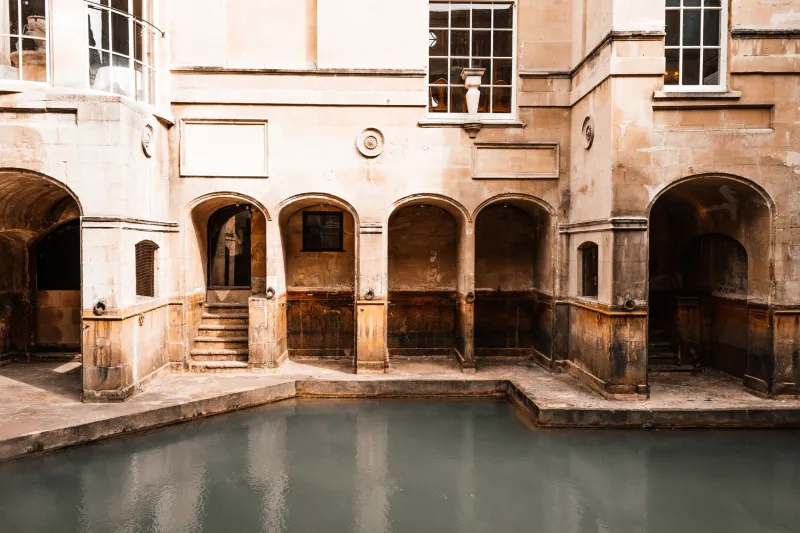
Thermae: Where Rome Went to Be Seen Recovering
The Roman baths — thermae — are often cited as evidence of ancient egalitarianism. And technically, yes, some public baths charged minimal entry fees that most citizens could access. But that's a bit like noting that Central Park is public while ignoring that the apartments surrounding it start at $10 million.
The bath culture that mattered — the one that signaled status, built networks, and provided genuine restoration — was not the public thermae. It was the private bath complexes attached to aristocratic villas, and the resort towns that catered almost exclusively to the Roman elite. Baiae, on the Bay of Naples, was the ancient world's most famous wellness destination. Senators, generals, and emperors went there to take the waters, eat well, and be seen doing both. Cicero complained about the moral looseness of Baiae while visiting repeatedly. Nero had his mother killed nearby. It was that kind of place.
The thermal springs were real and the health benefits were genuinely believed. But Baiae wasn't just about the water. It was about the social performance of recovery — of being someone whose schedule was demanding enough to require this particular kind of relief. The exhaustion was the credential. The resort was the proof you'd earned it.
Meanwhile, the slaves who maintained those villas, the laborers who kept the roads passable, and the agricultural workers who fed the whole operation had access to none of it. They were tired in ways that no thermal spring could address, and no one designed an institution to help them.
The Plague Villa and the Guilt-Free Getaway
The 14th century's Black Death killed somewhere between a third and half of Europe's population, depending on the region. It is the most catastrophic public health event in recorded Western history. It is also the backdrop for one of literature's most famous accounts of wealthy people retreating to the countryside to wait it out in comfort.
Boccaccio's Decameron opens with a group of Florentine aristocrats — seven women, three men — escaping the plague-ridden city for a villa in the hills outside Florence. There they eat well, tell stories, and spend ten days in organized leisure while the city dies below them. Boccaccio presents this as sensible rather than monstrous, because for his audience, it was. The countryside villa as refuge from urban catastrophe was a completely normalized option for people with means. You left. Everyone else stayed.
This pattern repeated during every subsequent epidemic in European history. During the cholera outbreaks of the 19th century, wealthy Americans and Europeans retreated to mountain resorts and seaside hotels while urban working populations — who couldn't leave their jobs, their tenements, or their neighborhoods — bore the full mortality weight of the disease. The rich called it taking the cure. The poor called it Tuesday.
The Sanitarium and the Invention of Legitimate Exhaustion
The 19th century added a new wrinkle: the medicalization of upper-class tiredness. The diagnosis of neurasthenia — essentially, nervous exhaustion caused by the demands of modern civilization — swept through American and European medical culture in the 1880s and 1890s. The treatment was rest, fresh air, and removal from the pressures of professional and social life.
Sanitariums and rest cures were prescribed almost exclusively to the middle and upper classes, because the diagnosis itself required a certain kind of life to produce it. You had to be doing something mentally taxing — managing a business, navigating high society, pursuing intellectual work — before a doctor would certify your exhaustion as medically legitimate. Physical labor, no matter how genuinely destroying, didn't qualify as the kind of stress that produced neurasthenia. It produced something else: poverty, which was its own problem and not a medical one.
The Adirondack Great Camps, built by industrialists and bankers in upstate New York during this era, were essentially luxury sanitariums with better architecture. You went there to recover from being important. The servants who cooked your meals and cleaned your cabin recovered from nothing. They went home.
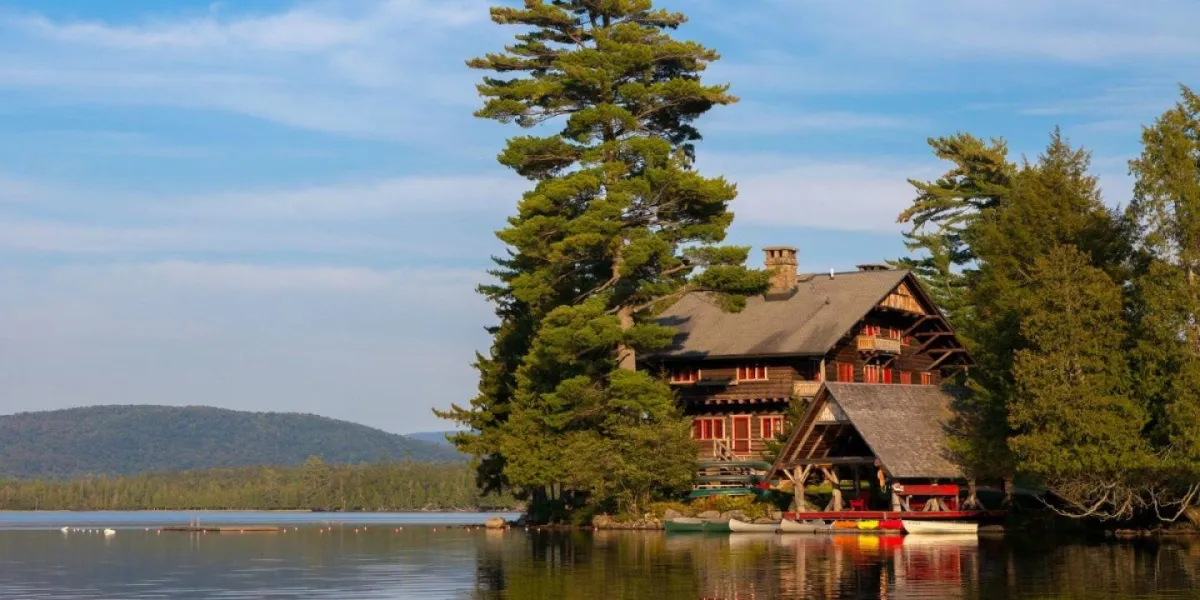 Photo: Adirondack Great Camps, via images.squarespace-cdn.com
The $6,000 Reset Experience Is Running the Same Play
The modern wellness industry is enormous — estimated at over $5 trillion globally — and it is overwhelmingly oriented toward people who already have significant resources. Not because relaxation is inherently a luxury, but because the premium version of it, the kind that gets marketed as genuinely transformative, requires money, time, and the kind of job that will still be there when you get back.
A warehouse worker or a hospital aide or a restaurant line cook is, by any objective measure, more physically depleted by their labor than most people booking a four-night sound bath retreat. But the wellness industry isn't selling to them. It's selling to people whose exhaustion comes with enough income to monetize it — and enough cultural capital to frame burnout as a condition that requires expert intervention rather than just a different job.
This isn't a conspiracy. It's just the market doing what markets do: finding the customer with money and building the product around them. The same thing happened in Baiae. The same thing happened in the Florentine hills. The same thing happened in the Adirondacks.
The Real History of Rest
What's genuinely consistent across five thousand years isn't that humans need rest — they obviously do, always have, always will. What's consistent is the social machinery that decides whose exhaustion is legitimate, whose recovery is worth investing in, and who gets to perform the ritual of restoration publicly enough that everyone can see they needed it.
The wellness retreat has always been two things at once: a genuine psychological need and a status signal. The Roman aristocrat at Baiae, the Florentine noble in his plague villa, and the tech executive at a Sedona breathwork retreat are all, in some real sense, tired. They're also all, in some equally real sense, demonstrating that their tiredness is the important kind.
The people most exhausted by history have rarely been the ones writing about how they recovered from it.