Who's Paying? The 3,000-Year Argument That Never Actually Ends

Who's Paying? The 3,000-Year Argument That Never Actually Ends
You know the moment. The server sets the check down somewhere in the vague middle of the table. Everyone suddenly becomes very interested in the ceiling, or their phone, or a fascinating spot on the tablecloth. Someone makes a halfhearted grab for it. Someone else makes an equally halfhearted protest. The calculation happening in everyone's head has nothing to do with arithmetic and everything to do with status, obligation, and what the outcome will say about the relationship.
This is not a you problem. This is not a generational problem. This is not something Venmo will fix. This argument is older than money in any form you'd recognize.
The Symposium as Status Tournament
The ancient Greek symposium — the formalized drinking party that produced some of the most important philosophy and poetry in Western history — was also a meticulously organized exercise in figuring out who owed what to whom.
The basic structure involved a host, guests, shared wine, shared food, and a set of social obligations that were anything but casual. Hosting a symposium was expensive and was understood as a public display of wealth and generosity. Not hosting when it was your turn was a social failure. Hosting poorly — too little wine, bad food, unimpressive guests — was almost worse.
But the interesting part isn't the host-guest dynamic. It's what happened in the more informal shared-cost arrangements, when a group of men (it was almost always men) gathered at a tavern or hired a space together. Greek sources, including passages in Aristophanes and Athenaeus's Deipnosophistae, describe elaborate negotiations about who contributed what, who owed whom from the last gathering, and who had conveniently "forgotten" to bring their share.
 Photo: Athenaeus, via www.gonnelli.it
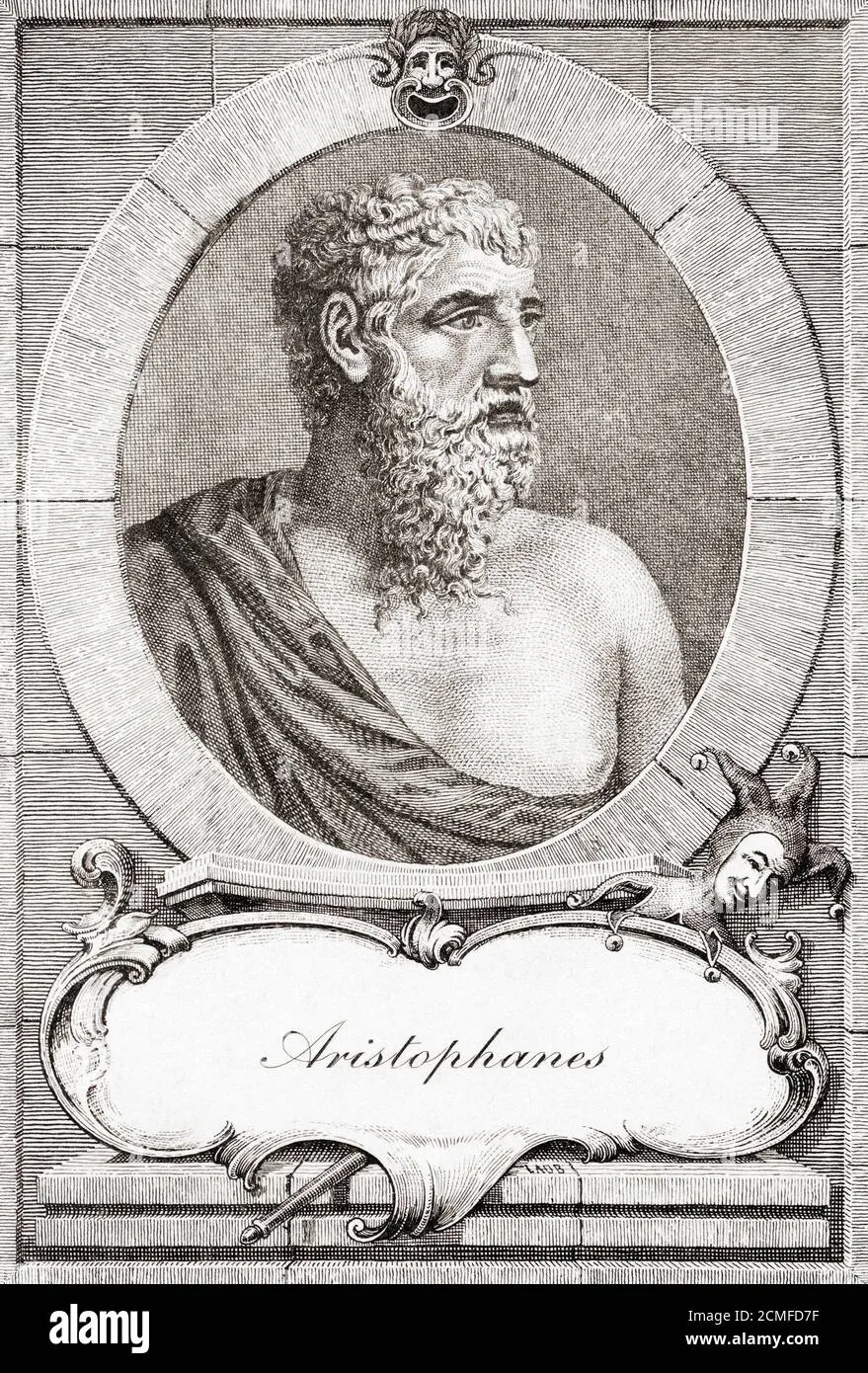 Photo: Aristophanes, via c8.alamy.com
Athenaeus, writing in the second century AD but drawing on centuries of earlier sources, catalogs the social types at these gatherings with a specificity that suggests he was drawing on lived experience: the man who always arrives after the food is ordered, the man who claims his portion was smaller and therefore owes less, the man of higher status who assumes his presence at the table is itself a contribution. Every modern dinner party has these people. They were at Greek symposia. They were probably at whatever gathering preceded those.
Roman Tabs and the Hierarchy of Obligation
Rome's tavern culture was enormous, commercial, and socially stratified in ways that made the check question even more fraught. Roman popinae — the wine bars and food stalls that served the non-elite population — operated on a cash basis, but that doesn't mean the payment dynamics were simple.
When a group of Roman men drank together, the question of who paid encoded their relationships with remarkable precision. A patron drinking with clients was expected to cover the tab — that was part of the patronage relationship, and failing to do so was a genuine social breach. But what happened when two men of roughly equal status drank together? Or when someone of ambiguous rank joined a group? The tab became a live negotiation about where everyone stood.
Roman writers treated this as both comedy and social commentary. Horace describes dinner parties where the economics of the table are a source of constant low-grade tension. Martial's epigrams include multiple pieces about men who engineer situations where someone else ends up paying — and the social contempt that follows when the maneuver is too obvious.
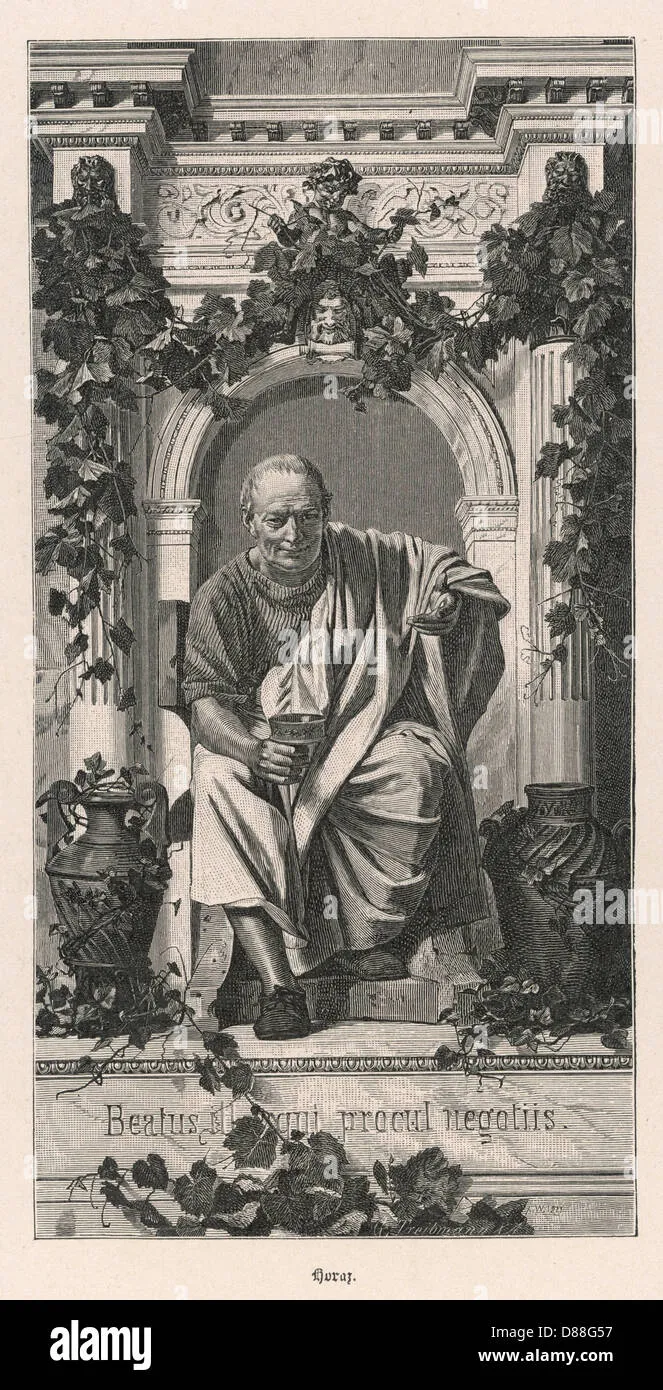 Photo: Horace, via c8.alamy.com
The sportula — a daily dole that Roman patrons gave to their clients — was partly a way of managing this dynamic. If the patron gave clients enough to cover their share of communal meals, the status question was pre-answered. The fact that patrons had to invent a whole separate financial mechanism to manage the social anxiety of shared meals tells you something about how persistent the problem was.
The Math That Isn't About Math
Here's the thing that behavioral economics has confirmed in approximately a thousand studies that any Roman tavern-keeper could have told you for free: people are not primarily doing arithmetic when they split a check. They're doing social accounting.
Fairness research consistently finds that people will reject objectively good deals if the deal feels unequal. The classic demonstration is the ultimatum game — one person gets a sum of money and proposes how to split it with a stranger. If the split feels unfair, the stranger will often reject it, taking nothing rather than accepting an insulting offer. This is not rational in the narrow economic sense. It is completely rational in the social sense, because accepting an unfair deal signals that you can be taken advantage of, and that signal has real downstream costs.
So when your friend suggests splitting the check evenly after ordering the salmon and two extra drinks while you had the soup and water, the irritation you feel isn't really about the $12 difference. It's about what accepting that arrangement says about the relationship and your place in it. You're not being petty. You're running a social calculation that your ancestors ran in Greek taverns and Roman popinae and medieval alehouses and every diner in New Jersey for the last fifty years.
Who Pays When Status Is the Question
The most revealing version of the check fight isn't between equals — it's between people whose relative status is in flux or unclear. A job candidate having lunch with a potential employer. Two friends where one has recently made significantly more money than the other. A first date where traditional gender roles are being consciously negotiated or unconsciously re-enacted.
These situations are uncomfortable precisely because the check forces a declaration. Whoever pays is making a statement about the relationship. Whoever accepts the payment is accepting a particular position within it. The moment can't be made neutral, which is why every attempt to make it neutral — "let's just split it," "I'll get it this time," "we can Venmo later" — creates its own set of social signals that everyone reads and nobody discusses out loud.
Medieval European feast culture handled this by making the hierarchy completely explicit. Seating at a lord's table was organized by rank, and who received what food and drink was publicly determined by status. There was no ambiguity about who was paying (the lord) or what that meant (he was the lord). The clarity was socially efficient, if not exactly egalitarian.
Modern American culture, with its strong ideological commitment to the fiction of social equality, has no equivalent mechanism. We don't have assigned ranks. We're supposed to be peers. So the check lands in the middle of the table and the fiction has to be negotiated in real time, awkwardly, with everyone pretending they're just figuring out the math.
The Point Was Never the Money
Three thousand years of evidence on this question converges on one conclusion: the argument about who pays is a proxy for conversations that nobody wants to have directly. It's about who has power in this relationship, who owes whom something that can't be denominated in dollars, and whether the social ledger between these people is balanced or not.
Greek symposium guests weren't really fighting about wine costs. Roman clients weren't really fighting about tavern tabs. You're not really fighting about the salmon.
You're all fighting about the same thing humans have always fought about when they sit down together and have to decide, in public, what they mean to each other. The check just makes the question unavoidable for a few excruciating seconds.
Venmo doesn't solve this. It just moves the awkwardness to a notification.